








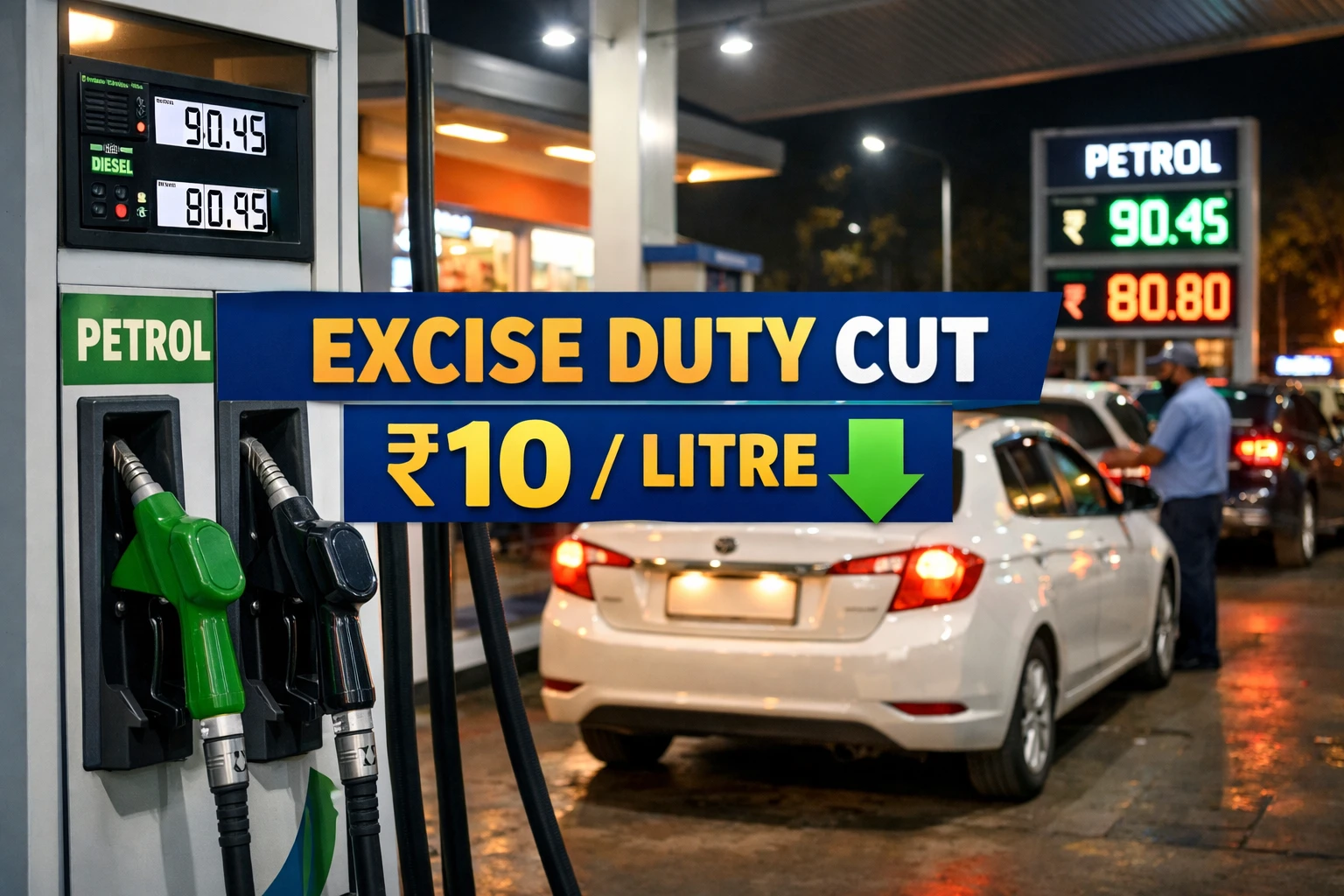
India Excise Duty Cut Petrol Diesel ₹10 Brings Fuel Price Relief
India excise duty cut petrol diesel ₹10 has emerged as a major relief measure for consumers, as the government announced a reduction of ₹10 per litre on both fuels. The move is expected to lower retail prices immediately and ease inflationary pressure across sectors.
The decision comes amid fluctuating global crude oil prices and growing concerns over rising transportation and household costs.
Why the Government Cut Excise Duty
The excise duty reduction is seen as a strategic move to provide direct relief to citizens and support economic stability.
Fuel prices play a critical role in India’s inflation cycle. Higher petrol and diesel costs typically push up logistics expenses, which in turn affect food prices and essential goods.
By lowering duties, the government aims to:
- Reduce inflationary pressure
- Support consumption demand
- Ease financial burden on households
The move also comes at a time when global crude oil markets remain volatile due to geopolitical tensions.
Impact on Petrol and Diesel Prices
As a result of the reduction in excise duty by ₹10 per liter, fuel prices are expected to decline substantially in major cities.
What it means for consumers:
Reduced cost of daily commute
Reduced cost of transportation
Possible reduction in the prices of goods and services
According to industry experts, the reduction may differ slightly in different states in terms of taxes, but the excise duty cut will be applicable across the country.
Economic and Market Implications
The cut in excise duty may have larger implications for the economy of India.
Lower fuel prices can result in better business margins for various industries, especially those like logistics, aviation, and manufacturing. This might give a boost to the economy in the coming months.
The move might also have its own implications on the revenue generated by the government, as the excise duty on fuel contributes significantly to its revenue.
What Happens Next
The next phase will depend on global crude oil trends and domestic inflation data.
If crude prices remain stable or decline, consumers could see sustained relief. However, any sharp rise in global oil prices may offset some of the benefits.
The government may also consider further policy adjustments if inflation pressures persist.
Disclaimer
This article is based on publicly available information and reports from reliable sources. Readers are advised to verify updates from official government announcements and trusted financial news platforms.