








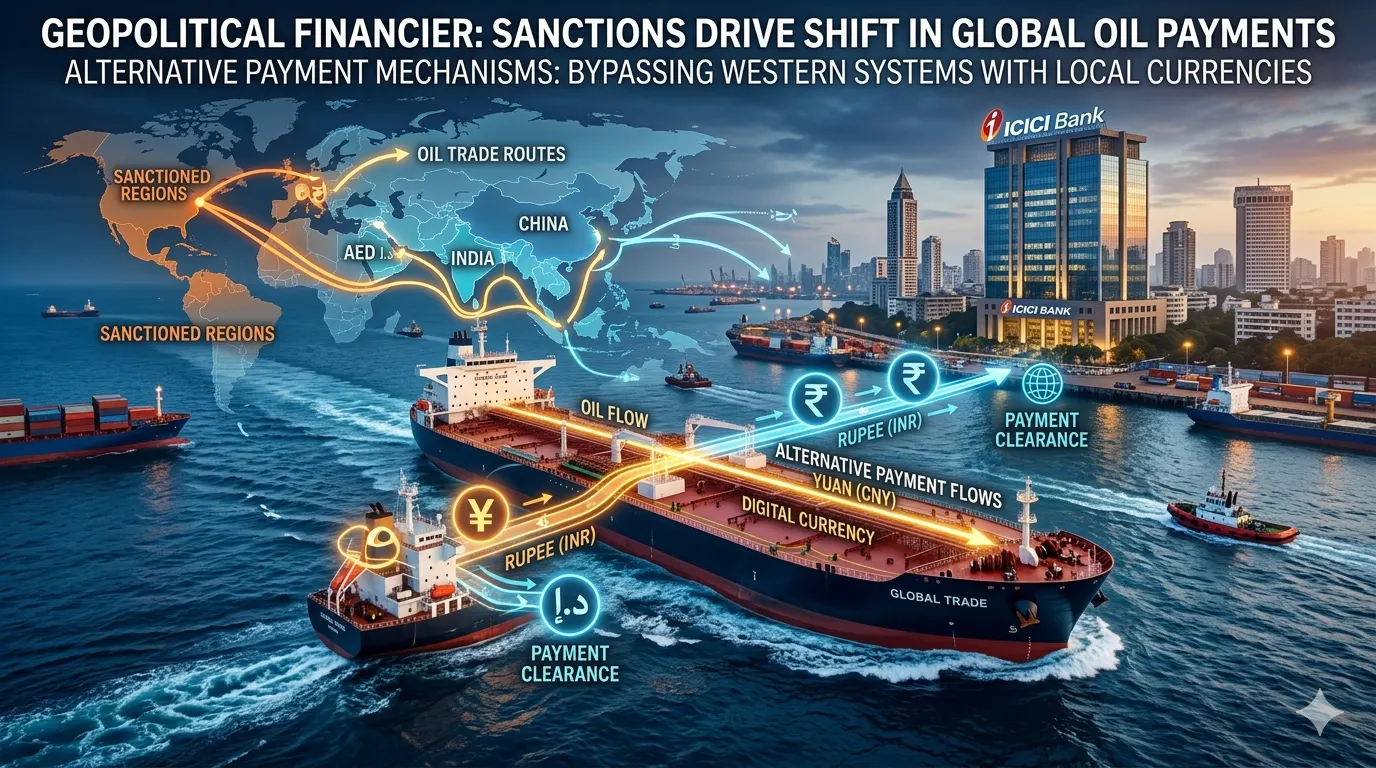
Alternative currency routes emerge in global oil trade amid sanctions.
Indian refiners were reported to use the Chinese yuan currency to pay for Iranian oil via ICICI Bank, indicating the emergence of new ways of settling payments in the international energy sector.
The deal was made possible under a 30-day sanctions waiver granted by the United States government to allow Iran to sell its oil on the global market for a stable price while the war continues.
New Payment Channel Using Yuan
As per news reports, payments for the Iranian crude oil were made using ICICI Bank, with branches in foreign countries like China’s Shanghai. Payments were done in yuan rather than US dollars.
Reasons for the US Granting the Waiver
The waiver, which came into effect in March, was intended to relieve pressure on global oil supplies resulting from the conflict between the US and Israel related to Iran.
- Permitted the sale of oil that was already onboard vessels
- Waived until April 19, 2026
- Aided in freeing up millions of barrels into international markets
This was an attempt to avoid any sudden increase in oil prices amid the ongoing crisis.
India Returning to Iranian Crude
India had ceased importing Iranian oil since 2019 because of US sanctions.
Nevertheless, the temporary waiver helped to facilitate some purchases:
- State-owned and privately-owned refineries started buying selectively
- One transaction valued at roughly $200 million was executed
- Monetary arrangements were different, including partial advance payments
Shifting Away from Dollar Supremacy
The utilization of yuan for oil deals indicates a more significant shift in international trade practices.
Some key consequences are as follows:
- Reduced reliance on the US dollar
- Greater involvement of China in energy trade across the world
- Development of new routes for financing amid sanctions
These options are gaining popularity among nations that operate amid political restrictions.
Waiver Set to Expiration
This provision remains temporary in nature.
It has already been stated by the United States that the waiver period will come to an end soon.
There may be difficulties for India in acquiring oil under these circumstances.
Implications for India
For India, the scenario poses both advantages and disadvantages:
Advantages:
- Availability of discounted crude
- Diversification of supply sources
Disadvantages:
- Risks of sanctions
- Payment complications
- Unsurety about future supply
The refiners might be compelled to reconsider their procurement approach in the light of growing international regulations.
Conclusion
The payment of Iranian oil with yuan through ICICI Bank clearly illustrates how geopolitics is impacting the practices of international trade.
Although temporary waivers have allowed some leeway, the sanctions regime is likely to have an ongoing impact on the manner in which nations such as India acquire energy resources in the years to come.
Disclaimer
It is important for all readers to visit our Terms and Conditions page on our website prior to forming any conclusions from the findings of this report. The present report relies on information that is accessible in public domains and credible international news reports.