





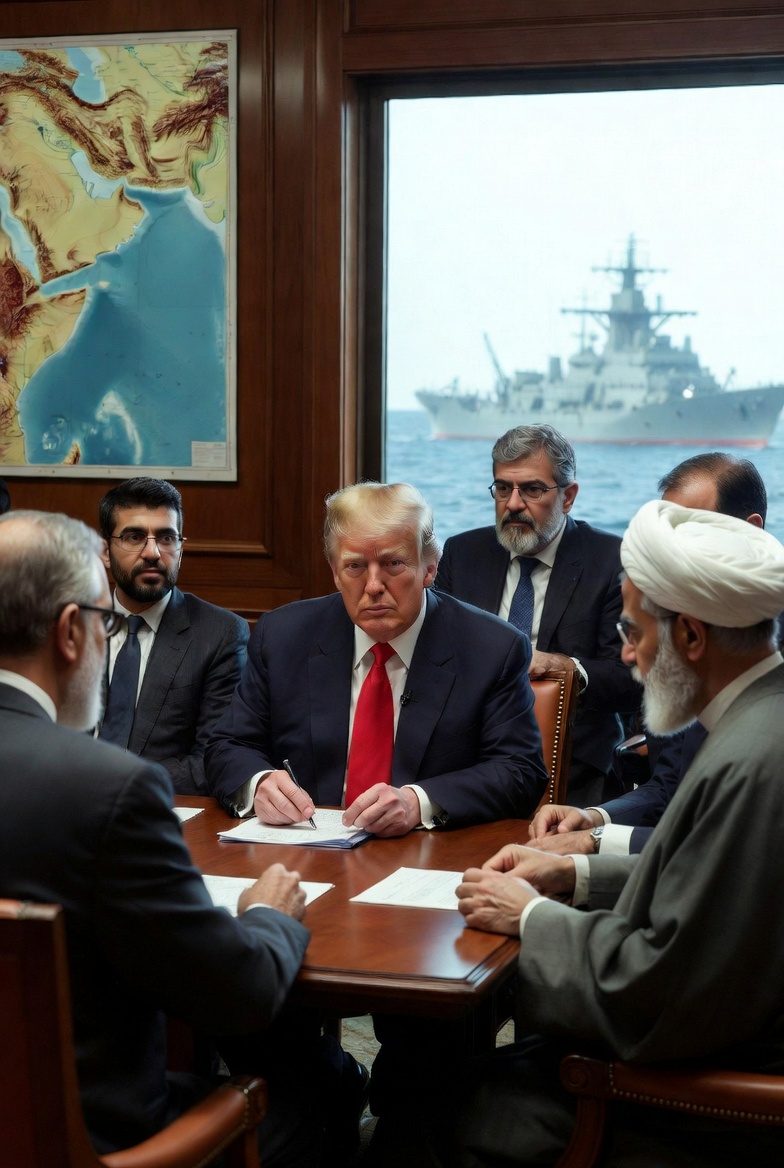
For the last few months it looked like things were heading straight toward another ugly showdown in the Middle East.Huge American aircraft carriers and destroyers steaming into the region, Trump openly talking about a “beautiful armada,” fresh sanctions, fresh threats, fresh Israeli airstrikes on Iranian nuclear sites last summer. The whole vibe screamed: we’re one bad headline away from things going kinetic.Then—surprise—Trump decided to try talking instead.In early February 2026, U.S. and Iranian teams sat down (well… not in the same room, but you get the idea) for indirect talks in Oman. Steve Witkoff, Trump’s special envoy, was there. So were some serious U.S. military figures. Iran sent its foreign minister’s people. After a couple of days of back-and-forth through Omani mediators, both sides actually said nice things about the meeting.Trump called it “very good.”
Iran’s side said it was a “good start.”
They even agreed to meet again the following week.That’s… not nothing.But let’s be real: the gap between the two sides is still enormous.The U.S. basically wants Iran to:
- Stop enriching uranium at home forever
- Give up most of its ballistic missiles (or at least the longer-range ones)
- Stop arming Hezbollah, the Houthis, and other proxy groups
- Explain where several hundred kilos of near-weapons-grade uranium disappeared to
Iran’s answer so far has been some version of:
“Thanks, but no thanks.”They keep saying their nuclear program is a “right,” that missiles are non-negotiable for self-defense, and that they’re not going to talk about what their allies in Lebanon or Yemen do. Classic Iranian red lines.A lot of people who watch these talks for a living think Iran is playing the long game again: keep the Americans talking, run out the clock, hope Trump gets impatient or distracted by something else (trade wars, domestic politics, China, whatever), and avoid military strikes for another year or two.Trump, meanwhile, is doing classic Trump: big stick + dealmaker hat.He still has the carriers sitting there as a very visible threat. He’s slapping new tariffs and secondary sanctions on anyone who does serious business with Iran. He keeps saying if there’s no deal, “the consequences are very steep.” But at the same time, he’s clearly trying to see whether he can actually get a handshake (or at least a piece of paper) instead of another war.Israel is not thrilled.
Netanyahu is set to see Trump soon, and you can bet Jerusalem will be pushing hard for a deal that leaves zero enrichment capability in Iran—or no deal at all.So where does that leave us?Right now there’s a tiny, fragile window where real diplomacy might happen. Both sides are at least in the same conversation. That’s more than we’ve had in a while.But the margin for error is tiny. One bad leak, one missile test, one more protest crackdown in Tehran, one more airstrike—any of those could slam the door shut fast.For the moment, though, they’re talking.
Whether that actually leads somewhere—or just becomes another chapter in the world’s longest on-again-off-again diplomatic soap opera—only the next few weeks will tell.