Edition: IndiaTuesday, 9 June 2026 at 04:13:12 pm UTC

Sponsored
Loading sponsor message...
VetoPost News Desk
Speech playback is not available in this browser.
Philippines Earthquake Leaves School Community Reeling After Tragedy
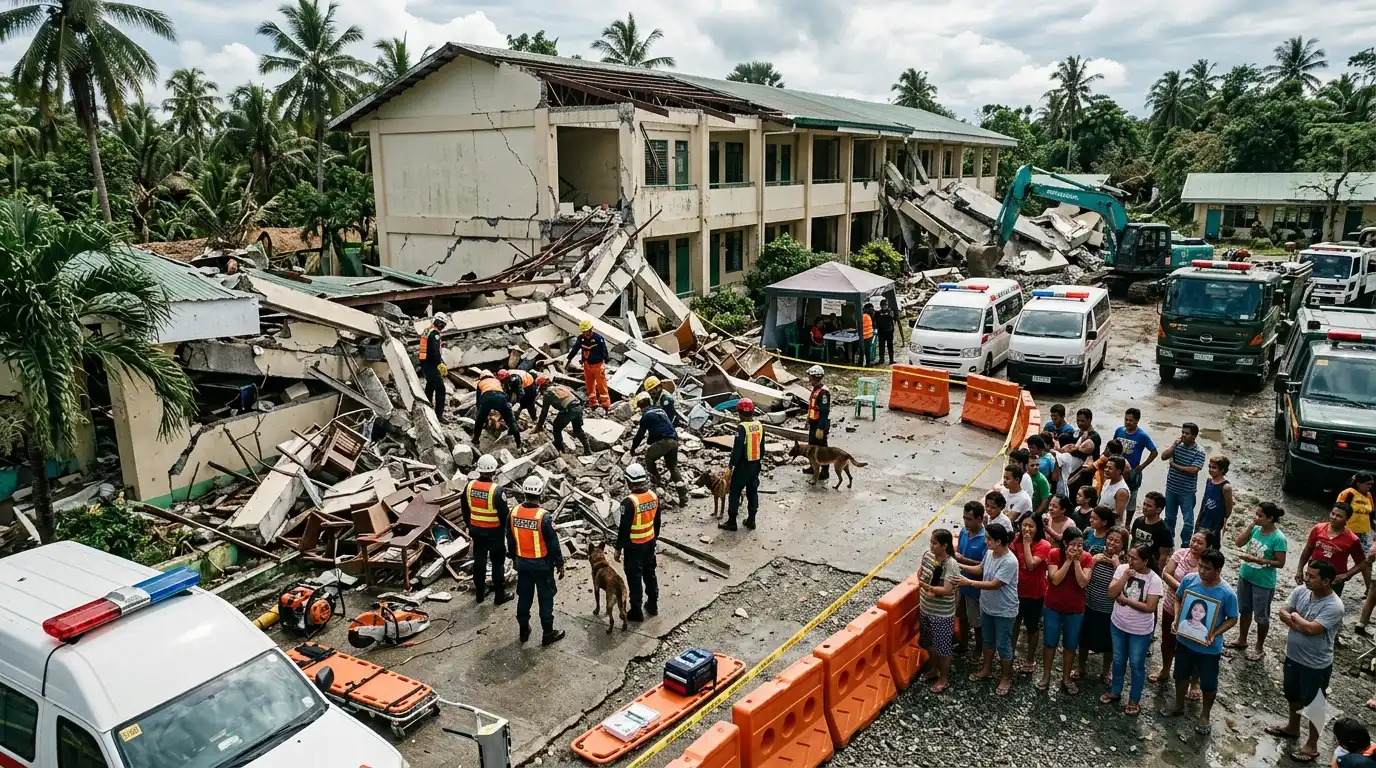
A devastating earthquake in the Philippines has led to a tragedy involving a local school community, triggering emergency rescue operations and drawing national attention to the vulnerability of educational institutions during natural disasters.
Authorities continue to assess the full extent of the damage while rescue personnel work to secure affected areas and account for those impacted. The incident has prompted renewed discussions about school infrastructure, emergency preparedness, and disaster resilience in a country frequently exposed to seismic activity.
Emergency Response Underway
Local emergency services, disaster response teams, and government agencies were deployed shortly after the earthquake struck. Rescue workers have been conducting search-and-recovery operations while medical teams provide treatment and support to injured individuals.
Officials have established safety perimeters around damaged structures and urged residents to avoid entering compromised buildings until engineering inspections are completed.
Several temporary shelters have also been activated to assist displaced families and community members affected by the disaster.
School Community Among the Hardest Hit
The tragedy has had a profound impact on students, teachers, staff, and families connected to the affected school.
Witnesses described scenes of panic as the earthquake shook classrooms and surrounding areas. Emergency evacuation procedures were initiated, but structural damage and falling debris reportedly contributed to the severity of the incident.
Education authorities are coordinating with local governments to provide counseling services and psychological support for students and families coping with the aftermath.
Why the Philippines Faces Elevated Earthquake Risk
The Philippines is situated along the Pacific Ring of Fire, one of the world's most active seismic zones. The region experiences frequent earthquakes due to the movement of tectonic plates beneath the archipelago.
While many earthquakes pass without major consequences, stronger seismic events can cause widespread destruction, particularly in densely populated areas or locations with vulnerable infrastructure.
Experts have long emphasized the importance of earthquake-resistant construction and regular emergency preparedness drills, especially in schools and public facilities.
Government and Expert Reactions
Government officials expressed condolences to affected families and pledged support for ongoing recovery efforts.
Disaster management agencies have begun evaluating structural integrity at schools and public buildings in nearby areas to identify potential risks and prevent further incidents.
Seismologists and disaster preparedness experts say the event highlights the continuing need for investment in resilient infrastructure, improved building standards, and comprehensive emergency response planning.
Experts note that schools require special attention because they often accommodate large numbers of children during daytime hours, making preparedness measures particularly critical.
Impact on Communities and Education
The immediate focus remains on rescue operations and humanitarian assistance. However, the earthquake's effects are expected to extend beyond the initial emergency phase.
Educational activities in affected areas may face disruptions as authorities inspect facilities and determine whether repairs or reconstruction are necessary. Parents and community leaders are also seeking assurances that school environments will be safe when classes resume.
Businesses located near affected zones could experience temporary interruptions, while local governments may need to allocate additional resources toward recovery and rebuilding efforts.
What Happens Next?
Authorities are expected to continue damage assessments in the coming days. Engineers will inspect school buildings and other public facilities to determine whether structures remain safe for occupancy.
Government agencies, educational institutions, and disaster response organizations are also likely to review emergency protocols and preparedness measures in light of the tragedy.
As rescue efforts continue, communities across the Philippines are once again being reminded of the importance of disaster readiness in one of the world's most earthquake-prone regions.
Conclusion
The school-related tragedy following the earthquake in the Philippines has left families, students, and communities mourning while emergency teams continue their work on the ground. Beyond the immediate response, the incident underscores the critical need for resilient infrastructure, effective emergency planning, and ongoing investment in public safety measures.
The coming weeks will be crucial as authorities complete investigations, support affected families, and begin the process of recovery and rebuilding.
Disclaimer:
Vetopost independently produces original news coverage based on publicly available information, official statements, and credible reporting. This article is intended for informational purposes only. While every effort is made to ensure accuracy, developments may change as new information emerges. Readers are encouraged to refer to official sources for the latest updates.
Reader reactions
Pick the response that matches how this story lands for you.
Sign in to join the conversation and post your comment.
No comments yet. Be the first to respond when subscriber commenting is available.