









Why India is pushing LPG users to switch to PNG
India’s push for PNG users to switch to LPG has now shifted from a gradual policy push to a more direct administrative push in 2026, especially for areas where piped natural gas infrastructure is already available. The rationale for this push is to ease the pressure on LPG logistics and to make fuller use of the city gas distribution network already available across urban India.
The rationale for this push is the Centre’s latest order for households in PNG-connected areas. According to reports based on this new framework, households that already have access to piped gas may now be required to switch away from LPG cylinders within a certain timeframe, and this will be driven by local gas distributors themselves.
The main reason is energy security
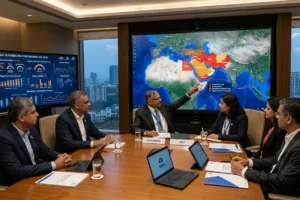
A significant cause for the push is India’s fuel supply risk in the face of international disruptions. Reuters reported this month that India has asked LPG users to avoid panic booking and opt for PNG as its supplies of crude oil, LPG, and natural gas have been hit by shipping difficulties due to Gulf and Strait of Hormuz tensions.
LPG requires cylinder filling, transportation, storage, and delivery to the doorstep. PNG requires direct supply through pipelines once the infrastructure is in place. This means that PNG is not dependent on transportation and refilling in regions where household pipelines have already been set up. This is one of the reasons why the government has pushed for PNG as a more reliable alternative in the face of international disruptions in LPG supplies.
The government has also issued a public statement that there is no new rule of a 35-day refill for LPG booking and that there are adequate LPG stocks in place. However, this has been issued in conjunction with a public appeal to avoid hoarding LPG and to prefer PNG.
India has already invested heavily in the PNG network
The push isn’t happening in a vacuum. India has spent several years growing its urban gas distribution infrastructure under the watch of the PNGRB. Official information provided by the PNGRB states that the mainland has seen its coverage increase to almost the entire population footprint of the rollout, domestic PNG connections have grown significantly since 2015, and 21 lakh new domestic PNG connections have been added in the financial year 2024-25.
The reason this is important is that governments generally want to utilize the infrastructure that has already been set up. If a household continues to utilize subsidized LPG cylinders despite having an active PNG connection, then that’s pressure on the parallel infrastructure of cylinders. From a policy perspective, using this infrastructure to switch households over to PNG allows for the distribution of LPG to be freed up for areas where there isn’t any pipeline infrastructure, i.e., rural and remote areas.
PNG also fits India’s cleaner fuel strategy
Another factor may be the overall gas-based economy concept. Official and regulatory sources have repeatedly emphasized the relative cleanliness and convenience of natural gas compared to many of the more conventional fossil fuels. They have also repeatedly emphasized the continued growth of the domestic PNG and CNG infrastructure.
The projections and policy papers recently put out by PNGRB have emphasized the growth of gas networks and their overall relationship to India’s long-term energy transition strategies. The domestic segment may be relevant to the government’s overall plans for blending compressed biogas into the energy mix.
The convenience factor for households using PNG may be simply that there are no waiting times for deliveries, no need to book cylinders, and no need to store heavy cylinders within the home. This may be part of the reason why city gas companies and others prefer PNG in urban clusters.
What this means for consumers
For consumers in areas where connections are already in place, the government’s message is increasingly clear: where there is gas in the pipelines, there is likely to be gas used for cooking. For areas where there is no gas in the pipelines, there is a chance that LPG is seen increasingly as a second-best option.
Of course, there are still issues to be clarified in relation to charges for installation, safety considerations, and service standards and speed of conversion. These are likely to be just as important as the policy decision. Recent reports suggest that there is to be formal notification and a transition period for eligible consumers ahead of the cessation of supply of LPG to such areas
What Happens Next
The next course of action will be dependent on the extent to which these new rules are adopted by gas distributors in these connected areas. Households in metro and urban clusters where gas pipeline infrastructure already exists are likely to be the first ones to witness the pace of this conversion.
The broader policy debate, of course, revolves around whether India can sustain its gas supply and price levels as its use of PNG grows. If India can sustain this, then the LPG-to-PNG transition can become a defining part of India’s urban energy landscape over the next few years.
Disclaimer: This article is based on publicly available reports and official regulatory publications, including Reuters and PNGRB materials.


