
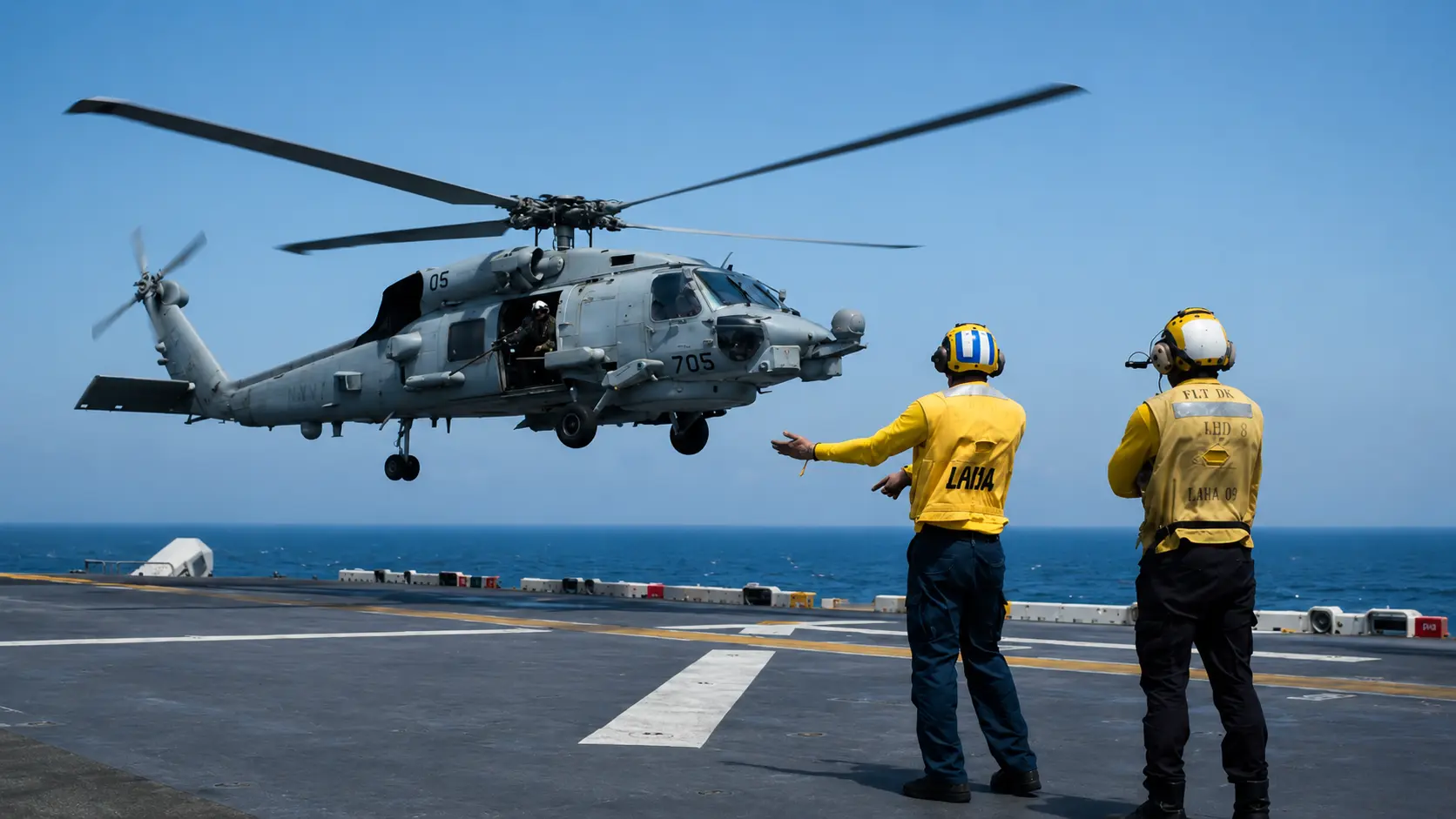
US Continues Airstrikes on Iran as Tensions Escalate Across the Gulf
The United States military carried out another series of strikes on Iranian targets, marking the 10th straight night of operations aimed at reducing Tehran's ability to threaten commercial and military vessels in the Strait of Hormuz.
The renewed attacks follow President Donald Trump's pledge to retaliate after recent Iranian strikes killed three American service members. Trump said Iran had been "hit very hard" during the previous night's operation, describing it as a response made in honor of the fallen troops.
Iran responded by claiming it had targeted two oil tankers transiting the Strait of Hormuz and launched attacks against US military facilities in Bahrain and Kuwait, according to the state-run IRNA news agency. Iranian President Masoud Pezeshkian declared that the country was now engaged in what he described as a "full-scale war" with the United States.
The Islamic Revolutionary Guard Corps (IRGC) also announced that it had struck infrastructure linked to the American technology company Amazon in Bahrain. Iranian state media reported that multiple cruise missiles were used to destroy what it described as the company's central data infrastructure.
Despite the ongoing military confrontation, Iranian officials said indirect diplomatic communication between Tehran and Washington was still continuing through mediators, even after the ceasefire efforts had collapsed.
The US Central Command (CENTCOM) said its latest operation targeted a range of Iranian military assets, including command centers, naval facilities, missile and drone launch positions, as well as air defense systems.
CENTCOM also stated that commercial shipping continued to move through the Strait of Hormuz despite the heightened conflict.
Iranian authorities said emergency teams were rescuing the crews of the two damaged oil tankers after the vessels were hit while attempting to pass through the strategic waterway.
Meanwhile, the United Kingdom Maritime Trade Operations (UKMTO) agency reported that a tanker sailing through the Strait of Hormuz had been struck by an unidentified projectile. The crew reportedly abandoned the ship and evacuated into lifeboats. It remains unclear whether this vessel was one of the two tankers referenced by Iranian officials.
The US Department of Defense later confirmed the identities of two of the American personnel killed in the recent Iranian attack on Muwaffaq Salti Air Base in Jordan. They were Private Isabella Gonzales, 19, from Texas, and Lieutenant Tyler James Feehan, 25, from Hawaii.
CENTCOM had earlier stated that a third US service member was initially listed as missing following the attack before unidentified human remains were discovered near the strike location.
Elsewhere in the Middle East, Jordan's military announced that it intercepted three Iranian missiles late Monday after air raid sirens warned residents of incoming threats.
Kuwait's armed forces also reported successfully shooting down Iranian drones earlier in the day.
Authorities in Bahrain said Iranian drones had targeted the country's air navigation infrastructure, though flight operations continued without disruption.
Regarding the previous night's US military action, Iran's semi-official Tasnim News Agency said multiple locations were struck, including Tabriz, Chabahar, Konarak, Bandar Mahshahr, and Bandar Imam Khomeini.
Iranian state media further reported explosions involving two oil tankers attempting to cross the Strait of Hormuz.
According to the IRGC, the vessels had been using what it described as an unsafe southern shipping route through the strait before the explosions brought them to a standstill. However, CENTCOM rejected Iran's version of events and disputed those claims.