





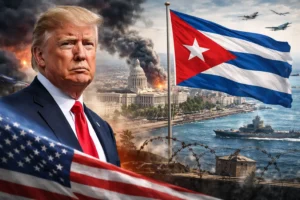


The question of Regime Change in Cuba has once again resurfaced in the realm of politics, especially in the context of the foreign policy agenda of Donald Trump. Although harsh policies against the Cuban government have appeal among certain electorates in the United States, experts warn that any further attempt at regime change could have the effect of destabilizing the Caribbean region and further straining U.S. relations around the world.
Cuba has been a perennial concern of U.S. foreign policy. Since the Cuban Revolution of 1959, led by Fidel Castro, the United States and Cuba have had decades of animosity, sanctions, and diplomatic crises. Although there was a brief warming of relations during the presidency of Barack Obama, the Trump administration has since undone much of this work, reimposing harsh economic sanctions and travel bans.
Why Regime Change in Cuba Appeals to Trump Allies
For many conservative policymakers and Cuban-American voters, a stronger approach to the Cuban government is a matter of moral conviction and political toughness. Cuban hardliners believe that the Cuban government’s authoritarian structure and lack of political freedoms make it a legitimate target for tough policies, such as increased sanctions and isolation.
Florida continues to be an important political battleground, and the Cuban-American community has traditionally supported tough U.S. policies against the Cuban government. The call for regime change is often part of a political campaign message that focuses on anti-communism and national security.
Supporters also believe that economic pressure could bring about political reform in Cuba. But critics argue that the policy of sanctions has not led to the downfall of the Cuban government but has instead made life more difficult for the Cuban people.
The Risks of Pursuing Regime Change
Experts in foreign policy caution that any aggressive push for regime change in Cuba could have unforeseen repercussions.
- Instability in the Region
Cuba is an important country in the Caribbean. Any escalation could lead to a migration crisis affecting the U.S. mainland, especially Florida. Historical events, such as the Mariel boatlift, have shown how rapidly a crisis can develop from tensions into a humanitarian crisis.
- International Diplomatic Ramifications
Most U.S. allies, especially in Europe and Latin America, would prefer a policy of engagement, not confrontation. An aggressive stance could lead to diplomatic isolation for the U.S. while increasing Cuban ties with geopolitical adversaries such as Russia and China.
- Humanitarian Issues
Cuba has experienced economic difficulties in the past few years because of the pandemic, loss of tourism, and currency changes. Sanctions that target regime change could lead to shortages of food, medication, and fuel, potentially creating internal instability rather than a political transition.
Historical Lessons from U.S. Policy
Historical attempts at changing the governments of other nations have sometimes yielded mixed outcomes. This has been true from the Cold War era to the more contemporary conflicts in the Middle East.
Regarding the Cuban situation, more than sixty years of sanctions have not caused the failure of the ruling structure. The Cuban government has managed to adapt to the situation by relying on government control and foreign alliances.
Political Calculations Ahead
As U.S. election cycles intensify, foreign policy narratives may increasingly reflect domestic political strategy. Regime change rhetoric can energize certain voter blocs, particularly in Florida, but the broader geopolitical implications remain complex.
Whether such policies would be implemented — or simply used as campaign messaging — remains uncertain. What is clear is that Regime Change in Cuba is not merely a political slogan; it carries tangible consequences for regional stability, migration, global diplomacy, and humanitarian conditions.
Disclaimer:
This article is based on publicly available information and policy discussions reported by credible international sources. It is intended for informational purposes only and does not represent official policy statements.


