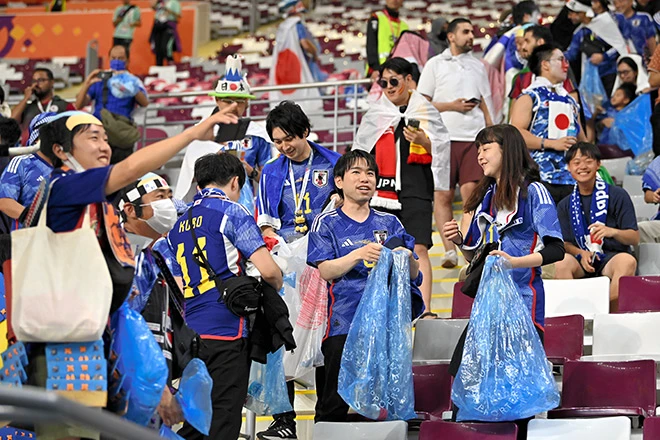


Women Tell Japanese Fans: Do It at Home Too After World Cup Stadium Cleanup
Global Praise for a Familiar Tradition
Japanese football supporters have once again captured international attention for their habit of cleaning stadiums after World Cup matches, a tradition that has become one of the most recognizable examples of fan sportsmanship in global football.
Videos and images from multiple FIFA World Cup tournaments have shown Japanese supporters remaining in the stands after matches to collect litter, sort waste, and leave seating areas tidy before departing. The practice has repeatedly earned praise from football fans, media organizations, and tournament officials worldwide.
The behavior was first widely noticed during the 2018 FIFA World Cup in Russia and has continued through subsequent tournaments, including Qatar 2022 and the ongoing 2026 competition.
A Different Conversation Emerges
While many celebrated the gesture, some women in Japan used the attention to highlight a broader social issue.
According to reports and public commentary surrounding earlier World Cup tournaments, some women argued that men who willingly clean public spaces after sporting events should demonstrate the same level of responsibility in their homes. The remarks sparked discussion about the division of household labor and gender expectations in Japanese society.
The debate shifted attention from stadium cleanliness to questions about whether cultural values of responsibility and respect are applied equally in both public and private life.
Why Japanese Fans Clean Up
Experts say the tradition is deeply rooted in Japanese education and social norms.
Children in Japan often participate in cleaning classrooms and school facilities from an early age, helping instill values of collective responsibility and respect for shared spaces. Researchers and cultural experts have linked the stadium-cleaning tradition to these experiences.
The practice is also associated with a Japanese proverb that emphasizes leaving a place in good condition after departure. Over time, the behavior has become a source of national pride and a visible symbol of civic responsibility.
Why the Story Matters
The discussion highlights how sporting events often become platforms for wider social conversations.
While the cleanup effort is largely viewed as a positive example of fan behavior, the reactions from some women demonstrate how public acts can prompt debate about everyday responsibilities and social expectations.
For organizers of major sporting events, the Japanese example continues to be cited as a model of respectful fan conduct. At the same time, the conversation at home reflects ongoing discussions about work-life balance, family responsibilities, and gender roles in modern Japan.
Looking Ahead
As the World Cup continues to attract global audiences, Japanese supporters are likely to remain in the spotlight for their distinctive approach to stadium etiquette.
Whether viewed as a symbol of civic pride or a starting point for broader social debate, the cleanup tradition continues to generate discussion far beyond the football pitch.
Vetopost independently produces original news coverage based on publicly available information, official statements, and credible reporting. This article is intended for informational purposes only. While every effort is made to ensure accuracy, developments may change as new information emerges. Readers are encouraged to refer to official sources for the latest updates.