
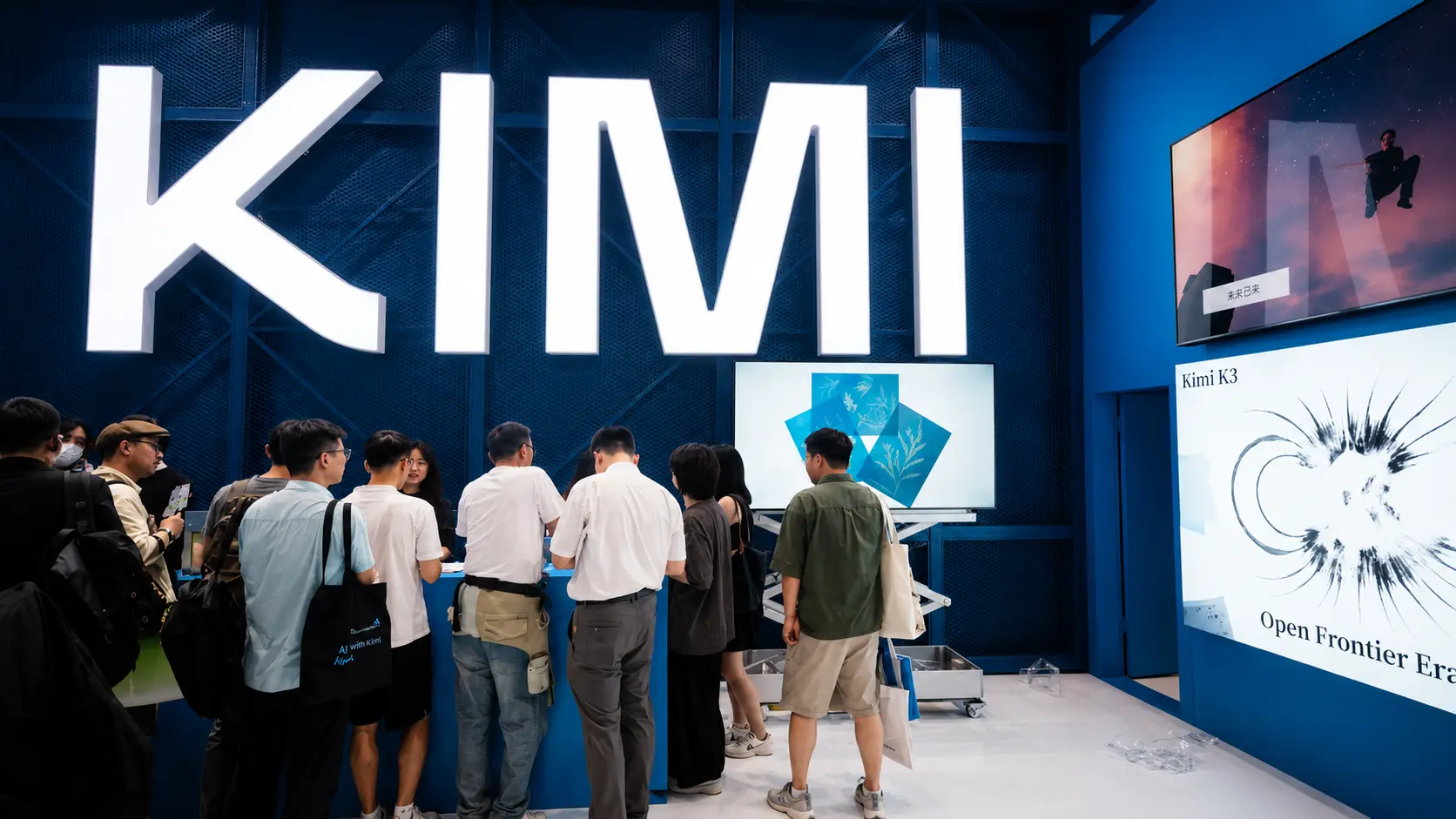
The White House has accused Chinese AI startup Moonshot AI of carrying out a large-scale effort to copy the capabilities of leading American artificial intelligence systems.
Michael Kratsios, science and technology adviser to US President Donald Trump, alleged that Moonshot AI relied on a technique known as AI distillation. This method allows a smaller or less capable AI model to learn by analysing the responses generated by a more advanced model.
In a post on X on Wednesday, Kratsios claimed the US government has evidence that Moonshot AI extracted capabilities from Anthropic's Fable AI while developing its latest K3 model. He also alleged that the Chinese company gained access to restricted Nvidia servers powered by the advanced GB300 Grace Blackwell platform for training its AI systems.
The BBC said it had reached out to Moonshot AI, Anthropic, Nvidia and the White House for responses, but no official comments had been received at the time of publication.
Moonshot AI attracted global attention after introducing its Kimi K3 model last week. The company claimed that K3 performs at a level comparable to some of the world's strongest AI systems, with many analysts viewing it as another sign that Chinese AI developers are rapidly narrowing the technological gap with their US counterparts.
The allegations involving Nvidia hardware come against the backdrop of US export controls introduced in 2022, which restricted China's access to Nvidia's most advanced AI chips over national security concerns. Since those restrictions were imposed, authorities in several countries have intensified efforts to prevent the illegal transfer and smuggling of high-end semiconductor technology.
Responding to questions from the BBC, the Chinese Embassy in Washington referred to comments made by Foreign Ministry spokesperson Lin Jian earlier on Wednesday. Lin criticised what he described as the politicisation of technology and trade issues and said China's approach to AI development is based on international cooperation and delivering benefits for all. He also urged countries to adopt a people-focused strategy when advancing artificial intelligence.
The latest accusations follow remarks made by US Treasury Secretary Scott Bessent, who said on Tuesday that Washington would investigate whether Chinese AI companies had copied the capabilities of American AI models through unauthorised methods.
Speaking again on Wednesday, Bessent warned that sanctions remain a possible response if Chinese firms are found to have engaged in large-scale intellectual property theft through AI distillation techniques.
"We support open-source AI and the innovation it enables, but open source should not become an excuse for stealing American intellectual property," Bessent said in a social media post.
China has not yet issued a formal response to the newest allegations. However, Chinese officials have previously maintained that the country's advances in artificial intelligence are driven by domestic research, sustained investment and international collaboration rather than technology theft.
The renewed scrutiny of Chinese AI companies comes as President Trump is expected to meet Chinese President Xi Jinping in September, adding further significance to the growing technology dispute between the world's two largest economies.
Moonshot AI is scheduled to release Kimi K3 as an open-source model on 27 July. Once available, developers and businesses around the world will be able to download, modify and build upon the model, making it one of the largest open-source AI systems released to date.
The latest accusations also echo claims made by Anthropic in June, when the company alleged that Chinese technology giant Alibaba had used AI distillation techniques to improperly replicate the capabilities of its Claude AI models.
Following those allegations, Anthropic called on the US Congress to introduce stronger penalties against organisations involved in AI-related intellectual property theft and to strengthen protections designed to safeguard American AI technology.
The White House has already indicated that protecting US AI innovation is becoming a strategic priority. In April, the administration announced plans to work more closely with domestic AI companies to counter what it described as organised foreign efforts to obtain proprietary technology.
At the time, Kratsios stated in an official memo that these campaigns were intended to systematically weaken American research leadership by gaining unauthorised access to valuable intellectual property and proprietary AI technologies.