




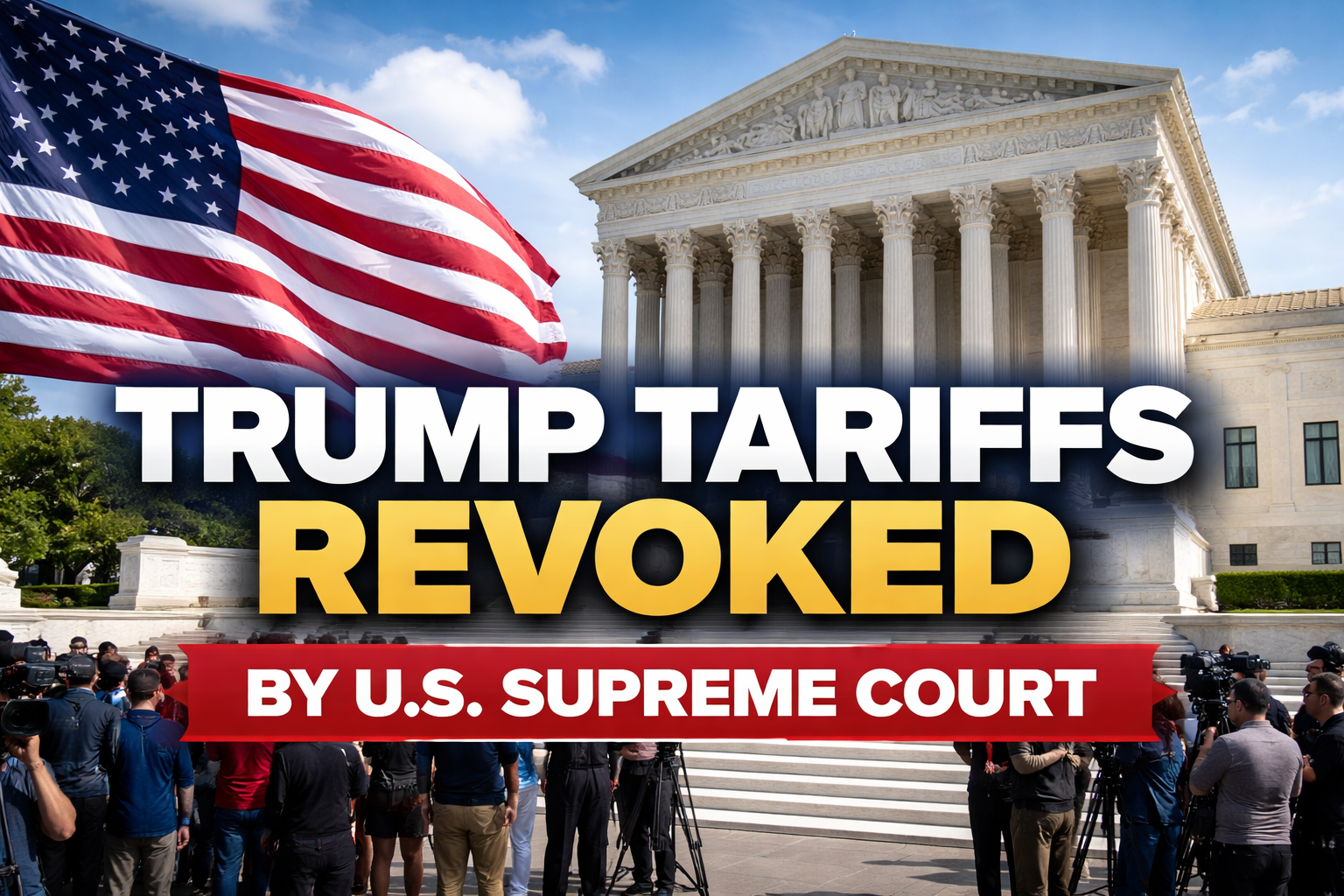
Trump Tariffs Revoked by US Supreme Court Reshape Trade Landscape
In a historic ruling, the Trump tariffs that have been revoked by the US Supreme Court have caused shockwaves in international trade markets. This ruling effectively invalidates an array of tariffs on imported goods that were imposed during the presidency of Donald Trump, thus ending a protracted legal dispute over the use of executive powers in trade issues. This ruling is expected to have immediate implications for importers, exporters, and trading partners of the United States.
This legal dispute was based on whether the previous administration had overstepped its mandate in federal trade laws in imposing far-reaching tariffs on major trading partners.
Background: Why the Trump Tariffs Were Imposed
During his tenure, Donald Trump imposed tariffs on nations like China on grounds of national security and unfair trade practices. The tariffs were imposed mainly under Section 232 and Section 301 of the United States trade laws. The tariffs were imposed on billions of dollars’ worth of products, including steel, aluminum, electronics, and consumer goods.
The step resulted in retaliation from trading nations and increased tensions in international markets. Companies across various industries claimed that the tariffs had increased their costs of production and affected supply chains.
Soon after, lawsuits were filed, raising questions about whether the tariffs were justified by the government under the relevant laws. After several years of litigation in lower courts, the case finally reached the highest judicial forum in the country.
Supreme Court Ruling: Key Implications
With the Trump tariffs revoked by the US Supreme Court, import duties on affected goods may be lifted or reviewed, potentially lowering costs for American companies and consumers. Analysts believe the ruling could:
- Reduce prices on certain imported goods
- Improve trade relations with affected nations
- Limit future presidential authority on unilateral tariff actions
- Trigger refund claims for previously collected tariffs
The decision is also expected to influence ongoing trade negotiations and set a precedent for how trade disputes are handled moving forward.
Economic and Political Impact
The financial markets reacted with caution as investors weighed the overall economic implications. Trade-sensitive sectors, such as manufacturing and retail, could immediately benefit if tariff refunds or changes are put into action.
From a political perspective, the decision sparks renewed controversy about the role of the executive branch in economic policy-making. Those in favor of the original tariffs argue they served to safeguard industries, while opponents say they hurt American consumers and foreign alliances.
The ultimate effect will be determined by how the current administration reacts to the situation and if Congress passes new trade legislation.
Disclaimer
This article is based on information sourced from publicly available reports and legal summaries. Readers are encouraged to review official court documents and government releases for comprehensive details.