








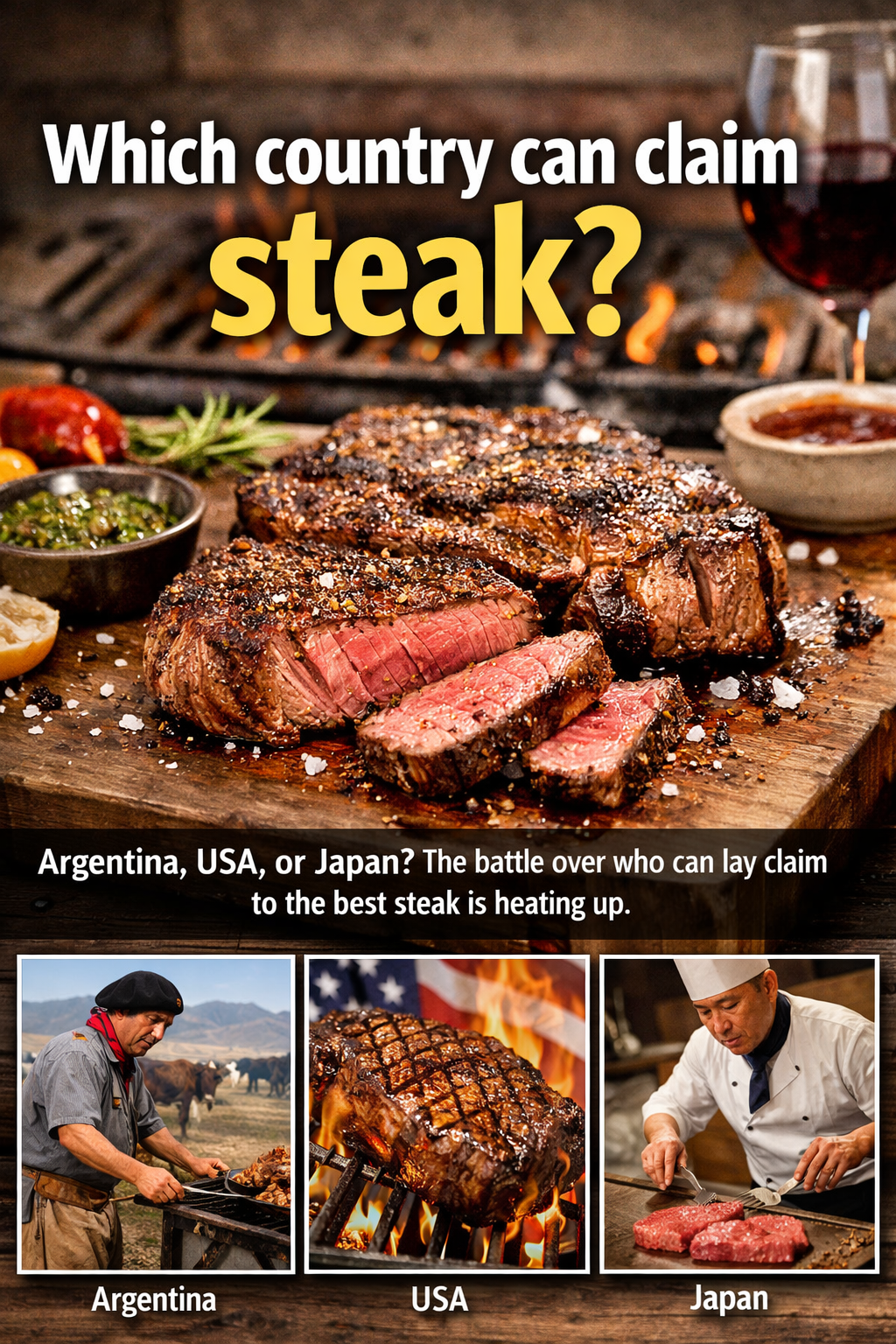
Which Country Can Claim Steak? A Global Culinary Debate
Introduction
The question of which country can claim steak is more complicated than it seems. While steak is often associated with modern Western cuisine, its roots stretch across continents and centuries. From open-fire cooking traditions to high-end dining, multiple countries have shaped what we now recognize as steak.
Argentina and the Culture of Asado
When discussing steak, Argentina often leads the conversation. The country’s deep connection to cattle farming and its famous asado tradition make it a strong contender.
In Argentina, steak isn’t just food—it’s a social ritual. Cuts of beef are slowly grilled over wood or charcoal, emphasizing natural flavors without heavy seasoning. The role of the gaucho (cowboy) in shaping this tradition is central to Argentina’s claim.
Argentine beef is globally recognized for its quality, thanks to grass-fed cattle raised in vast pampas regions.
United States and the Rise of Steakhouse Culture
The United States transformed steak into a global dining staple. From New York strip to ribeye, American steakhouses turned beef into a premium culinary experience.
During the 19th and 20th centuries, industrial meat production and urban dining culture helped popularize steak worldwide. Cities like New York and Chicago became synonymous with steakhouse dining, where presentation, aging techniques, and cuts became standardized.
Today, the U.S. plays a major role in defining how steak is consumed globally—from casual grills to luxury dining.
Japan and the Precision of Wagyu
Meanwhile, Japan offers a completely different interpretation of steak. Japanese wagyu beef is prized for its intense marbling, tenderness, and rich flavor.
Unlike Argentina’s rustic grilling or America’s bold cuts, Japan focuses on precision and craftsmanship. Each steak is carefully prepared, often cooked lightly to preserve texture and taste.
Wagyu has redefined steak as a luxury product, influencing global culinary standards and pricing.
A Shared Global Legacy
The truth is, no single country can fully claim steak. Variations of cooking meat over fire date back to early human history. Europe also contributed through medieval feasts and evolving butchery techniques, shaping modern cuts and preparation styles.
Instead of belonging to one nation, steak represents a shared culinary evolution—refined differently by cultures across the world.