








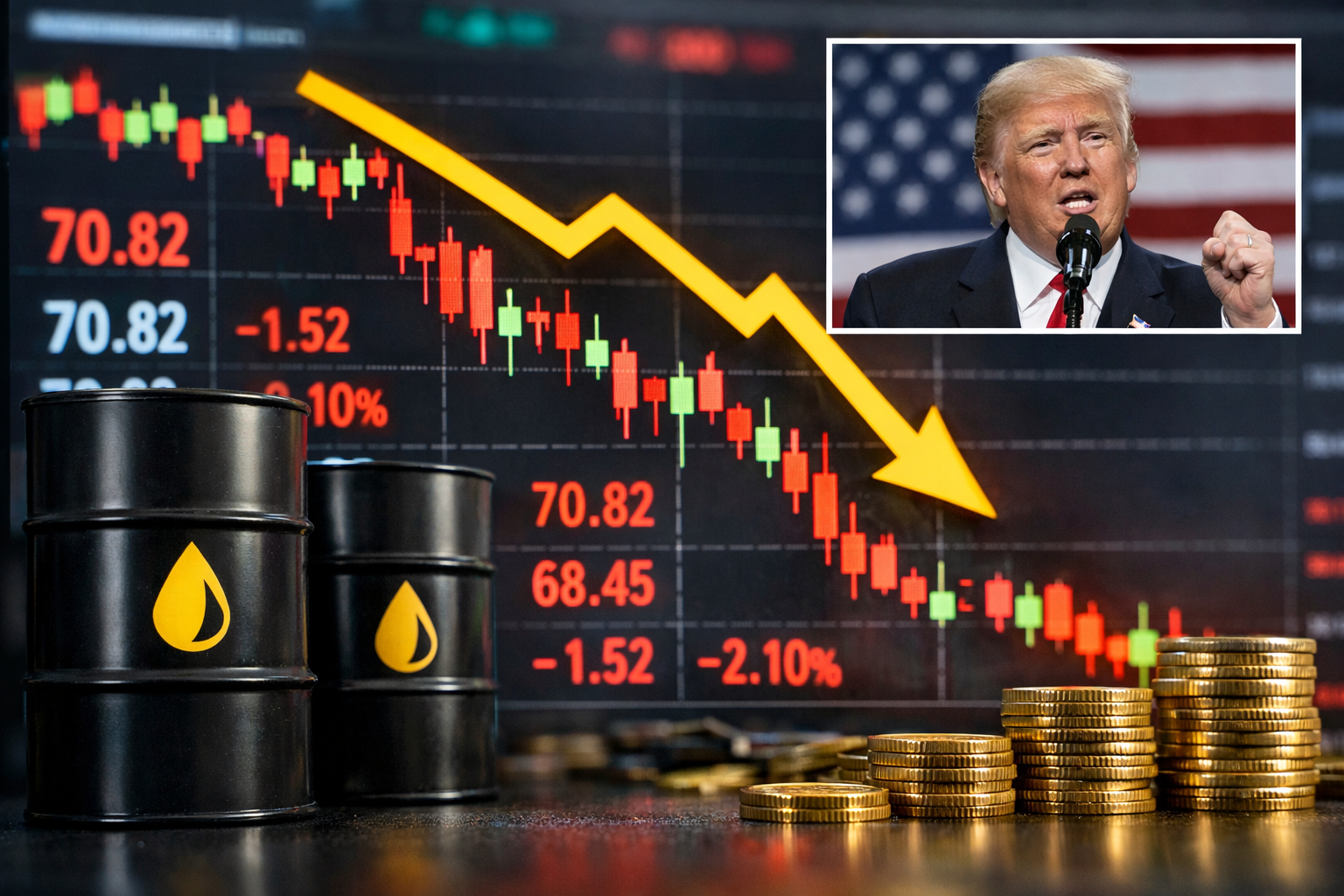
Global energy markets showed signs of relief Tuesday as oil prices dip after Trump says Iran war will end soon, a statement that briefly calmed fears of prolonged disruption in the Middle East.
Crude benchmarks fell modestly in early trading after former U.S. President Donald Trump suggested the conflict involving Iran was “ahead of schedule” and could conclude “very soon.” The remarks were widely interpreted by traders as a signal that the geopolitical situation may stabilize faster than previously expected.
Oil markets have been highly sensitive to developments in the region, where tensions have raised concerns about supply disruptions and shipping risks across key energy routes.
Although prices remain elevated compared with earlier this year, Tuesday’s decline suggests investors may be reassessing the probability of a prolonged conflict affecting global crude supply.
Markets React to Political Signals
Oil markets often react quickly to geopolitical signals, especially when the Middle East is involved.
Analysts say Trump’s comments reduced immediate fears of supply shocks that could push crude prices sharply higher. Traders typically price in worst-case scenarios during conflicts, including disruptions to major oil producers or shipping routes.
Brent crude and U.S. benchmark West Texas Intermediate both slipped during the session as markets interpreted the statement as a potential sign of de-escalation.
However, energy strategists caution that market reactions to political remarks can be temporary. Until there is concrete evidence of reduced tensions, volatility is likely to remain.
Market participants are also watching developments near key oil transit corridors such as the Strait of Hormuz, a route through which a significant share of the world’s oil supply passes daily.
For more background on oil market movements, see:
https://www.reuters.com/markets/commodities/
Why the Iran Conflict Matters for Oil Prices
Iran is a very important player in the global energy system as a producer as well as a key player in the Persian Gulf region.
When the level of conflict increases in the region, markets tend to react in three ways:
Supply risk concerns – This is the main reason why investors become concerned about the cuts in production as well as the damage to the facilities.
Shipping disruptions – There is the possibility that there will be delays as well as security issues.
Speculative trading – This is the main reason why traders tend to push the prices up because of the perceived shortages.
Although there is no real disruption in the supply of oil, the perceived risk is the main reason why there can be substantial movements in the price.
This is the reason why even short political statements, like the one stating that the conflict will be over soon, can have a substantial impact on the markets in a matter of hours.
Energy Markets Remain Cautious
However, analysts are pointing out that the trend in oil prices is still uncertain, even after the drop in prices on Tuesday.
There are a number of factors that are currently affecting the prices:
Geopolitical issues in the Middle East
Demand trends in the global market, particularly in key economies
Oil production levels by oil-exporting countries
Strategic petroleum reserves
If the issues in the Middle East are resolved in the coming days, the prices may be stable once again. If, however, the issues are not resolved, prices may increase once again.
Investors are also looking at economic indicators, such as manufacturing activities and energy consumption, which can affect the demand for oil in the coming years.
What Happens Next
It appears that the focus of the energy markets over the next few days will still be centered on three issues:
- Updates on the diplomatic/military situation
If the situation appears to be easing, this could continue to drive oil prices downwards. - Security of shipping in the Persian Gulf
We are likely to see disruptions to oil tankers in this area. - Policy statements
We are likely to see statements coming out of the major governments of the world, as well as oil-producing nations.
If the situation eases as suggested, then oil prices are likely to drift downwards over time, but if the situation remains unclear, volatility remains likely to be a hallmark of the world oil market.
Disclaimer: This article is based on information from publicly available reports and reputable sources such as international news agencies and financial market updates. Developments may evolve as new information becomes available.