



Trump Renews Threat of Attacks on Iran’s Bridges and Power Plants
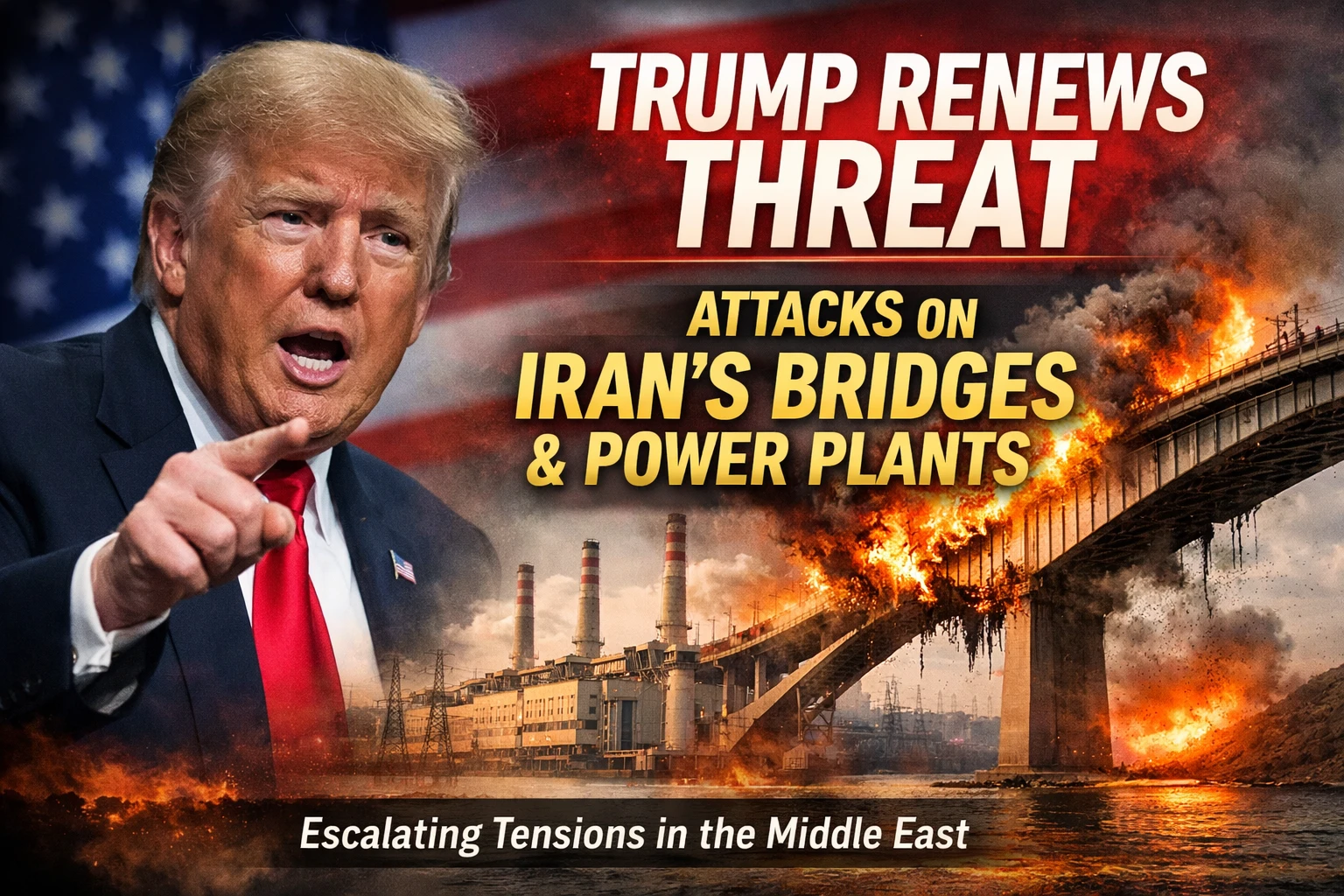
U.S. President Donald Trump has sharply escalated rhetoric against Iran, warning that critical infrastructure such as bridges and power plants could be targeted if Tehran fails to meet U.S. demands. The renewed threat comes amid rising tensions around the Strait of Hormuz, a vital global oil route.
Trump’s statement signals a potential turning point in the ongoing conflict, raising fears of wider regional instability and humanitarian consequences.
Ultimatum Over Strait of Hormuz
Trump made the threat based on Iran’s control of the Strait of Hormuz and threatened a strike on its oil supplies if the country did not allow free passage through the strait.
Reports have it that Trump threatened to destroy bridges and knock out power stations within a matter of hours.
This comes after a series of threats by the United States and Iran’s rejection of any ceasefire proposals without further assurances.
Global Backlash and Legal Concerns
This threat has been widely condemned by foreign observers and legislators. According to analysts, any large-scale attack against these utilities may be deemed indiscriminate and might adversely affect the civilians since it will significantly disrupt healthcare centers, water supply systems, and other vital utilities.
A number of political leaders and groups have cautioned that such an action may result in escalating tensions and causing greater unrest throughout the region.
Military Impact vs Civilian Consequences
Though there appears to be a clear indication of military escalation, according to analysts, any attack on power stations will probably not affect the military capability of Iran because of the nature of the infrastructures and alternative sources.
On the other hand, there may be catastrophic effects on civilians due to blackouts and destruction of infrastructures affecting millions of people.
Disclaimer
This article is based on publicly available information from international news reports and evolving developments. The situation remains fluid, and details may change as new updates emerge.