


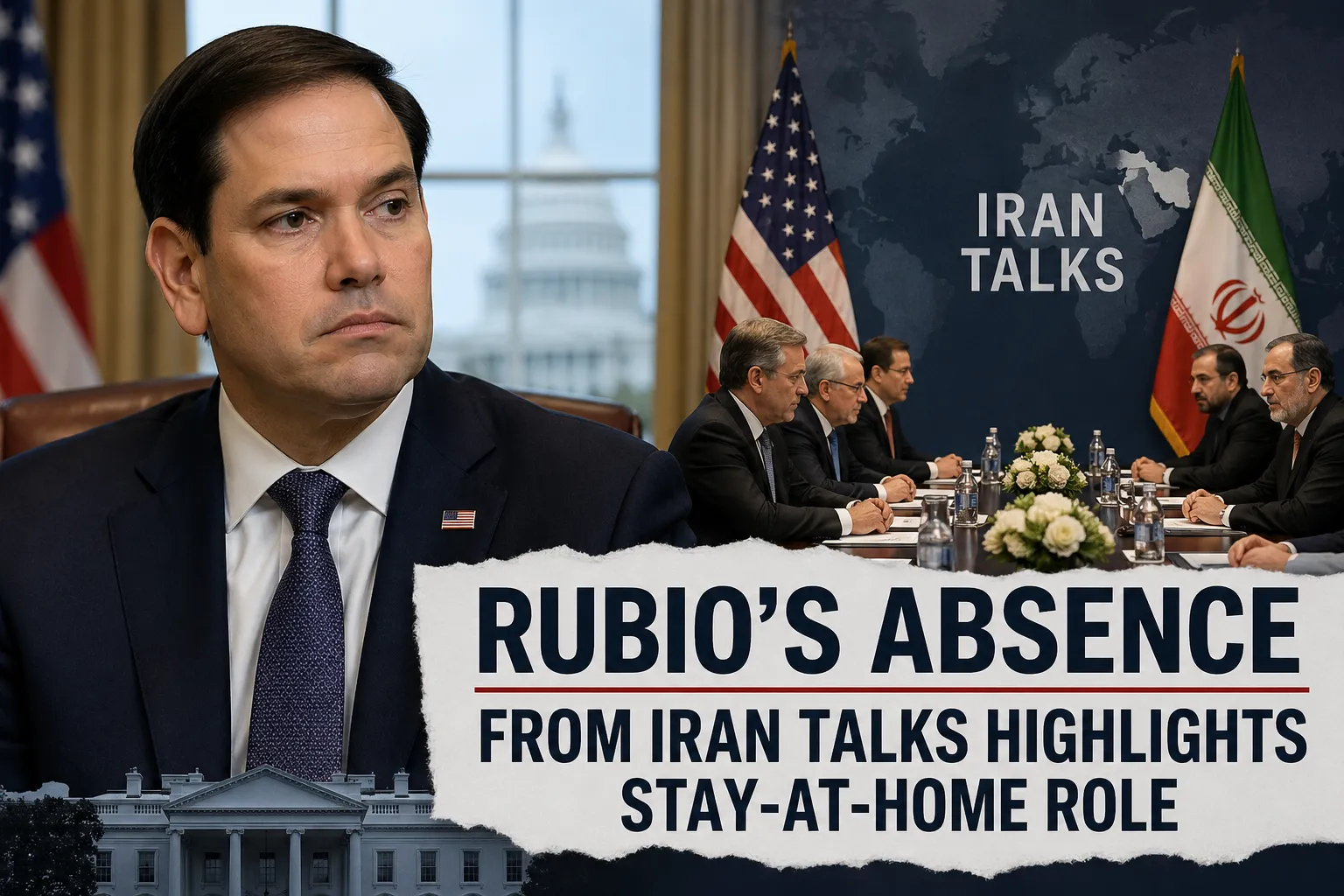
Rubio’s Absence From Iran Talks Highlights Stay-at-Home Role
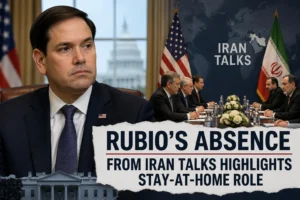
Marco Rubio’s absence from the recent talks between the United States and Iran has signaled, without being announced loudly, the changing strategy of the U.S. government in conducting what might be considered its most delicate diplomacy.
While Rubio would have traveled to the talks in previous rounds, this time he stayed put in Washington.
A Lower-Key Diplomatic Approach
The recent talks involving Iran have featured a considerable reduction in high-level engagement. Where previously, there were expectations of high-level individuals leading the talks, the current round of talks has involved representatives like Steve Witkoff and Jared Kushner.
Of particular interest is the fact that Rubio and Vice President JD Vance did not participate in the talks.
Apparently, this reduction was deliberately done, as officials indicate that keeping high-level individuals out of the talks lowers expectations.
Why Rubio Stayed Back
Rubio’s absence isn’t about disengagement—it’s about control.
By remaining in Washington, he retains the ability to:
- Coordinate broader U.S. strategy in real time
- Step in quickly if talks gain momentum
- Avoid overcommitting political capital to uncertain negotiations
The uncertainty surrounding Iran’s participation also played a role. With Tehran sending mixed signals about attendance and demands, dispatching top leadership could have been premature.
Talks Without Momentum
The current round of negotiations comes after earlier discussions failed to produce meaningful progress. Deep divisions within Iran’s leadership and disagreements over key issues—like nuclear policy and regional influence—continue to stall diplomacy.
Rubio himself has previously acknowledged the complexity of dealing with Iran’s leadership, describing negotiations as difficult and unpredictable.
A Strategic “Wait-and-Watch” Role
Rather than leading from the front, Rubio’s role now resembles that of a strategist operating from the sidelines.
This “stay-at-home” approach allows:
- Tactical flexibility if talks collapse
- Rapid escalation or de-escalation decisions
- Political insulation if negotiations fail
It also reflects a broader U.S. strategy—testing diplomatic waters without fully committing top leadership until tangible progress is visible.
What It Means Going Forward
Rubio’s absence may seem minor, but it reveals a deeper truth about the current state of U.S.-Iran diplomacy: expectations are low, risks are high, and patience is being prioritized over visibility.
If talks show signs of real progress, figures like Rubio could quickly re-enter the spotlight. Until then, Washington appears content to keep its top diplomat close to home—and its options open.
Disclaimer
This article is based on publicly available news reports and evolving geopolitical developments. Situations may change rapidly as new information emerges.