






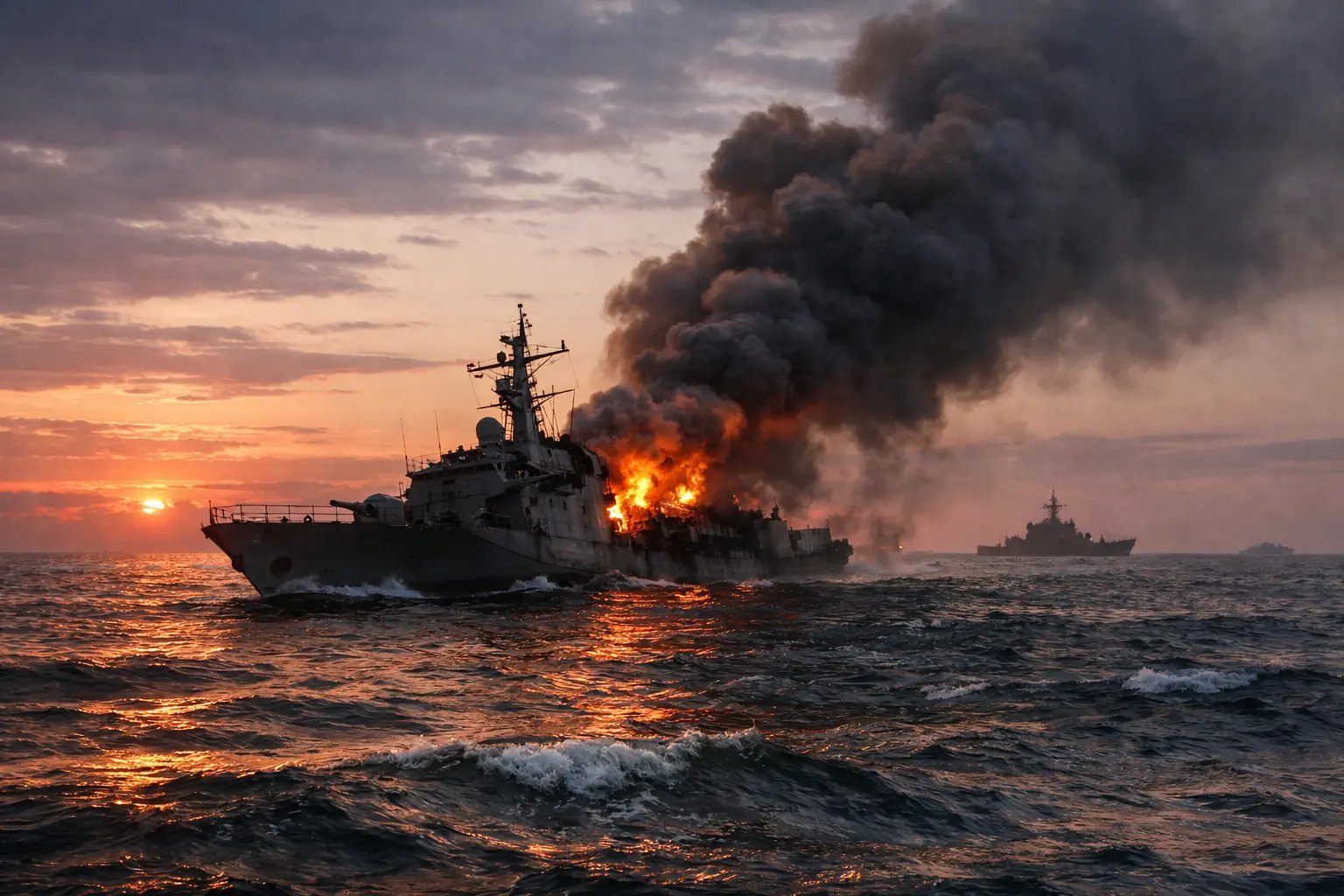
The latest voyage of the Iranian war vessel sunk by US forces has quickly become one of the most discussed developments in the ever-heightening tensions in the Persian Gulf region. The latest incident, which occurred in the vicinity of the strategically important Strait of Hormuz shipping lane, serves as a stark reminder of the thin line between military deterrence and actual conflict.
According to reports, the incident was described as a “dangerous escalation” by Iranian authorities, with senior officials in the country going as far as to say that “all red lines have been crossed.” However, authorities in the United States have also come forward to say that the incident occurred in light of a credible threat to maritime security in the region.
The sinking of the vessel serves as a stark reminder of the symbolic nature of the conflict between the United States and Iran.
The Warship’s Final Mission
According to regional security analysts, the Iranian ship was part of a patrol presence in these waters, which are near important commercial maritime routes.
Such activities are common for both Iranian and international naval forces, especially within and around the Strait of Hormuz, as one-fifth of the world’s oil supply travels through these routes.
According to reports, the war ship was conducting surveillance of maritime traffic and was part of a broader maritime security posture before encountering forces from the United States Navy.
Military sources indicate that the situation developed quickly after identifying “hostile intent” by the United States. Within minutes, the incident resulted in the destruction of the Iranian vessel.
Information regarding the number of crew members and whether any rescue was conducted is still limited.
Why the Strait of Hormuz Matters
The location of the event makes it very sensitive.
The Strait of Hormuz is one of the most important maritime chokepoints in the world. It is a very important waterway for the movement of vessels, such as oil tankers and cargo ships.
The involvement of the military in the region has raised concerns, considering the global market, the costs of insuring vessels for companies, and the geopolitical environment.
The region has witnessed several conflicts during the past ten years, which have involved issues such as drone strikes, the hijacking of tankers, and military drills.
For many experts, the sinking of the Iranian warship has been a major escalation compared to the previous confrontations, which did not involve direct casualties.
What Happens Next
The consequences of this incident have the potential to significantly influence the security environment in the Gulf for months to come.
There are a variety of possible consequences of this incident, which are now being closely watched:
Strengthening the naval presence: It is possible that both Iran and the United States will strengthen their naval presence in the region to prove their power.
Diplomatic pressure: International organizations, along with regional governments, are likely to pressure both nations to hold talks to avoid any further conflict.
Possible repercussions of the incident: It is believed that Iran will retaliate against the United States through indirect means.
Currently, governments across the Middle East, along with the rest of the world, are calling for restraint.
Disclaimer
This article is based on information reported by publicly available and reputable sources, including international news organizations and official statements. Details may evolve as further verified information becomes available.