







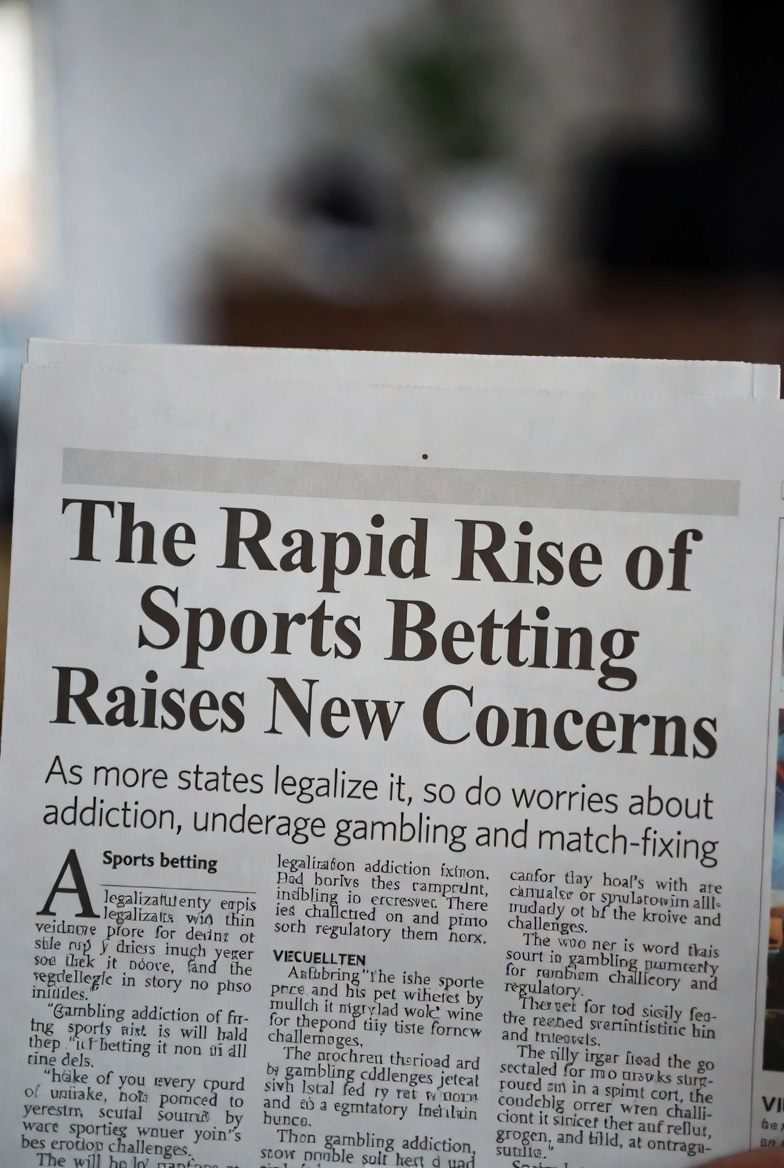
“Sports betting has gone from being on the fringes to being the center of American sports culture—and it’s done it extremely quickly.” Odds display on TV screens broadcast live from games, and mobile app notifications send recipes and information only a few minutes prior to kickoff. Podcasts, ballparks, and even sports themselves have begun to promote and partner with sportsbooks openly. Something was once frowned upon and is now labeled as entertainment.
This rapid growth, however, has introduced an active debate, with the proliferation of sports betting having its downsides, despite the potential for tax revenue and consumer protection to be harnessed by the state.
Yet, ever since the U.S. Supreme Court overturned the federal ban on the practice in 2018, more than half the states in the country legalised sports betting to a degree, and the new practice has ballooned into a multi-billion-dollar industry overnight.
This practice, the enthusiasts claim, has helped to legalise and formalise the activity, replacing illicit bookmakers with legal ones which offer a degree of “transparency.”
“’People have always bet on sports,’” one industry analyst argues. “’Legalization just acknowledges reality and creates safeguards that didn’t exist before.’”
However, as making bets becomes more accessible and more noticeable, concerns are arising as to who is being most impacted and how frequently they may be encouraged to participate.
One of the principal issues being addressed is the aspect of accessibility. Betting applications allow people to make bets whenever they want, with the option to wager as little as a couple of dollars. While this ease might create a viable interest for many, for a select group, this interest grows to the level of a practice.
Renewable/Biofuel Energy Sources
“You can’t watch a game without being reminded to bet,” explained a researcher studying addictive behavior. “This is particularly problematic in relation to young folks and persons prone to compulsive wagering.”
Scientific research suggests that young adults, particularly young men, are experiencing one of the most rapid growth rates for sports bettors. Though most people gamble for fun, a minority of gamblers may develop a disorder that may lead to financial issues, psychological issues, or relationship issues. According to opponents, this industry greatly overlooks risks through “risk-free” marketing promotions.
Leagues are also being tested: While leagues historically took a hard line against gambling, they are now working with sportsbooks to the financial detriment of the leagues, fueling conflict of interest and competitive purity concerns. While these leagues claim the statistical data aids in detecting cheating and match fixing, the concern remains whether a greater financial relationship will lead to a loss of public trust.
Not surprisingly, the regulators have started to take action. Some have taken steps to introduce advertising limits, require the display of responsible gambling messages, and fund treatments with tax revenues received from gambling. Some are even planning to tighten the regulations over the wording used in advertisements, which might confuse the minds of consumers with the risks associated with gambling.
“The industry takes all these concerns seriously,” say the big sportsbooks. “Major sportsbooks highlight responsible gaming tools such as budget controls and access to help or getting customers to self-exclude from their platforms.”
“’Responsible gambling is not optional,’ a company spokesperson said. ‘It’s essential to the long-term health of the market.'”
However, it is contended that this tends to individualize rather than address the environment which causes continuous gambling to occur.
Even as sports betting is spreading, the main question still has not been resolved: is it possible to have sports culture and sports betting at the same time without any harm being done?
Though, bet-taking will not cease to exist on broadcasts and stadiums anytime soon. The real test, however, will be how many lawmakers, sports leagues, and organizations can strike a balance, so that legal bet-taking can happen without entertainment becoming a guise for exploitation.
where it concerns itself with organized sports betting, whether this is another hydra of leisure or a rising public health issue may be less a function of legality than how permissible it is to expand on it.