








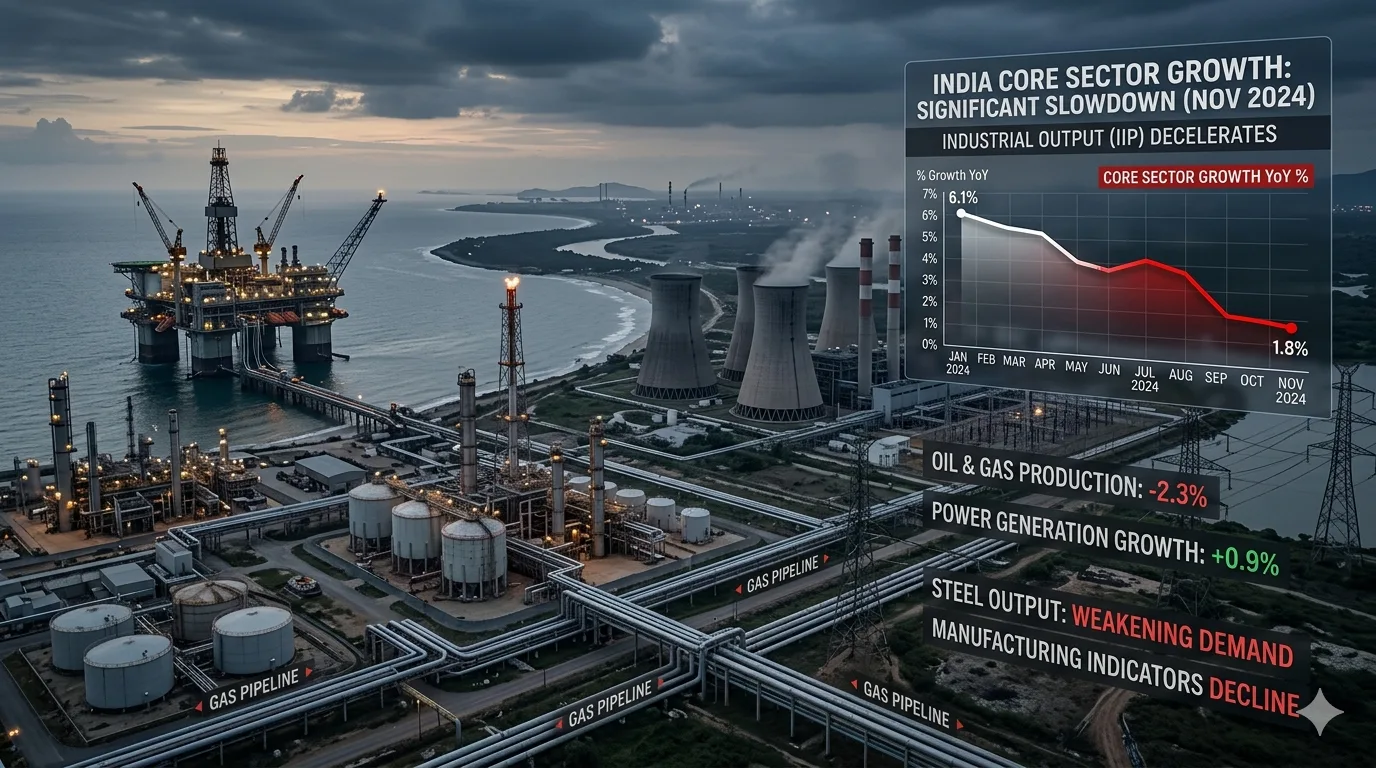
Falling oil and gas output drags India’s core sector growth down to 2.3% in February
India’s core sector growth has eased to 2.3% in February, indicating a substantial moderation in industrial growth, driven by a decline in oil and gas production.
Core sector growth in India comprises eight major sectors, including coal, crude oil, natural gas, refinery products, fertilizers, steel, cement, and electricity.
Energy Segment Weighs on Growth
This is because the decline has been largely driven by the performance of the production of crude oil and natural gas. These sectors are of critical importance to the economy because of the cascading effect they have when they decline.
It is noted by various analysts that the disruptions experienced in the energy sector have contributed to the decline.
Mixed Performance Across Sectors
While sectors like cement and steel have shown a relatively moderate growth rate, the overall growth momentum remains low due to a decline in energy-related sectors’ growth.
Electricity generation growth too has shown a lower growth rate due to a decline in demand and industrial growth.
Impact on Industrial Outlook
The slowdown in growth in core sectors can have implications for industrial growth as a whole, including the Index of Industrial Production (IIP).
- Slower economic growth
- Lower infrastructure growth
- Impact on GDP growth
Global Factors at Play
Global uncertainties like oil prices and geopolitical issues are still at large and are affecting India’s energy sector’s performance.
Any impact on supply chains or prices might affect India’s growth rate further.
Outlook Ahead
According to experts, India’s growth in core sectors depends on energy sector growth, global conditions, and infrastructure development plans.
However, the data released in February indicates that India might face new challenges in sustaining industrial growth under both domestic and global pressures.
Disclaimer
Before making any conclusions based on the content of this report, it is always advised that readers refer to our website’s page on Terms and Conditions first. This article has been prepared using data available in public domain and credible sources that have been quoted as references in this report. Economic data is constantly changing; it’s always advised to refer to updated data.