






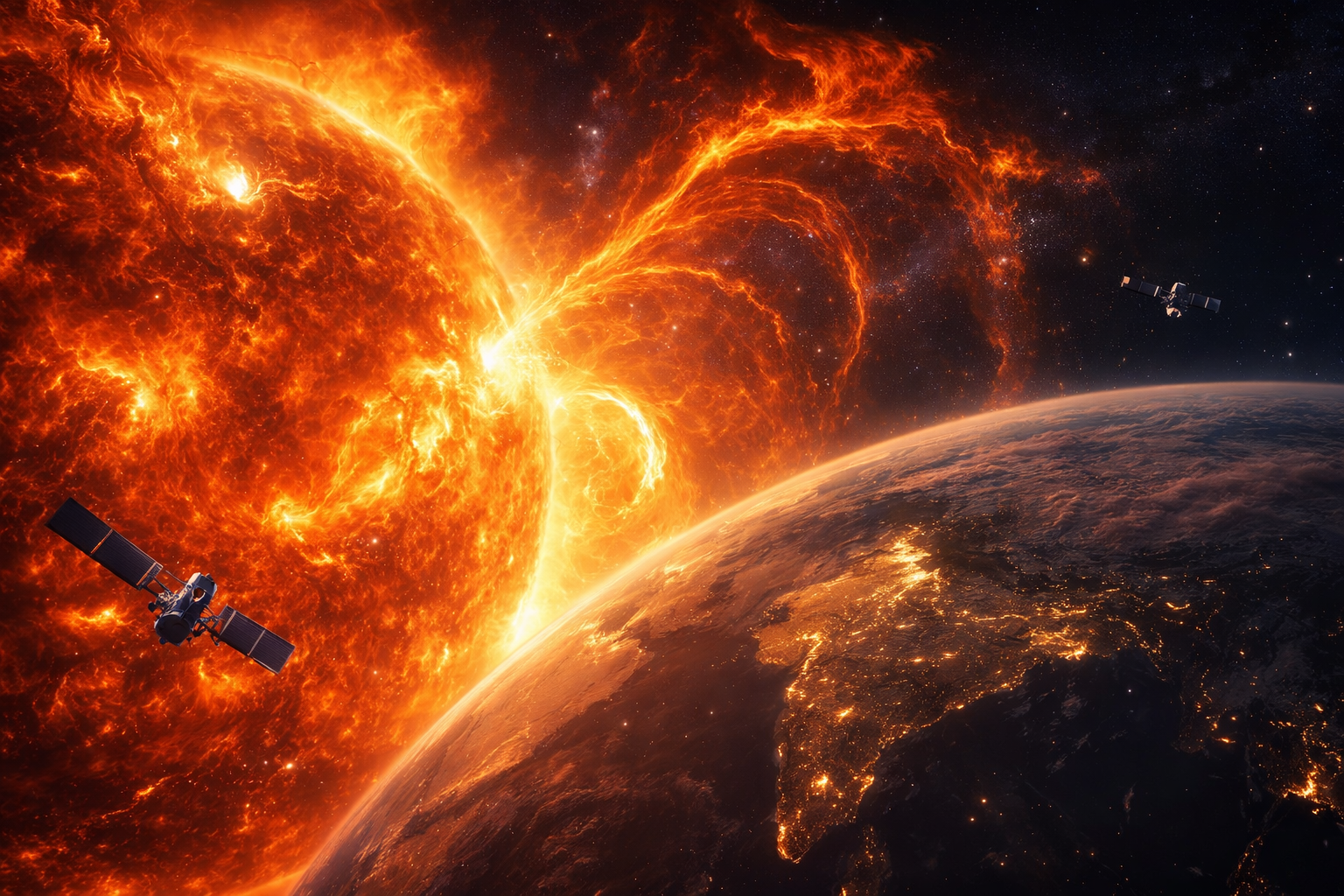
India may experience some disruptions in radio and satellite communications as the Sun moves into a very active phase, prompting a warning from the Indian Space Research Organisation (ISRO). Scientists are closely monitoring a series of intense solar flares that could cause strong radio blackouts, especially targeting high-frequency communication systems.
Experts on space weather say that the Sun has been releasing a series of intense energy bursts from a very unstable region of sunspots. The energy bursts emit high-energy radiation towards Earth, causing disturbances in the ionosphere, which is the layer of the Earth’s atmosphere responsible for reflecting radio signals used in long-distance communications.
Why ISRO Is Worried
According to ISRO representatives, the present solar activity raises the chances of short-wave radio blackouts, particularly during the daytime when the effect of the Sun on the ionosphere is at its strongest. Air traffic, maritime communication, emergency radio communication, and satellite navigation systems may experience occasional loss of signals if the solar flares affect the Earth directly.
The increasing use of satellite technology in India, ranging from navigation and weather forecasting to defense and telecommunication services, makes it essential to monitor such space weather events.
What is a Radio Blackout?
A radio blackout happens when the ionization of the Earth’s upper atmosphere caused by strong solar radiation leads to the absorption of radio waves instead of their reflection. This results in:
Disruptions to aircraft communication
Degradation of GPS accuracy
Interference with satellite control signals
Loss of amateur and emergency radio communications
Although these conditions are normally temporary, intense solar storms can cause frequent disruptions for several hours or days.
Aditya-L1 Watches Over the Sun
India’s solar observatory satellite Aditya-L1, located at the Sun-Earth Lagrange Point, is helping to monitor these phenomena. The satellite mission offers early warnings by analyzing solar flares, coronal mass ejections, and variations in solar wind patterns, giving researchers ample time to prepare for the impending effects.
Should the Public Be Concerned?
Scientists point out that solar storms do not directly affect human life but can affect technology-based systems. However, officials are warning operators of critical infrastructure to be on guard, while ISRO continues to keep a close eye on satellite health and communication systems.
As the Sun is nearing the peak of its 11-year solar cycle, scientists have warned that such occurrences may become more common in the months to come.