







Imagine waking up one morning and finding out that everything you’ve spent the last 10–15 years building in the United States — your job, your apartment, your kids’ school, your car payments, your little piece of safety — could disappear in a matter of weeks.
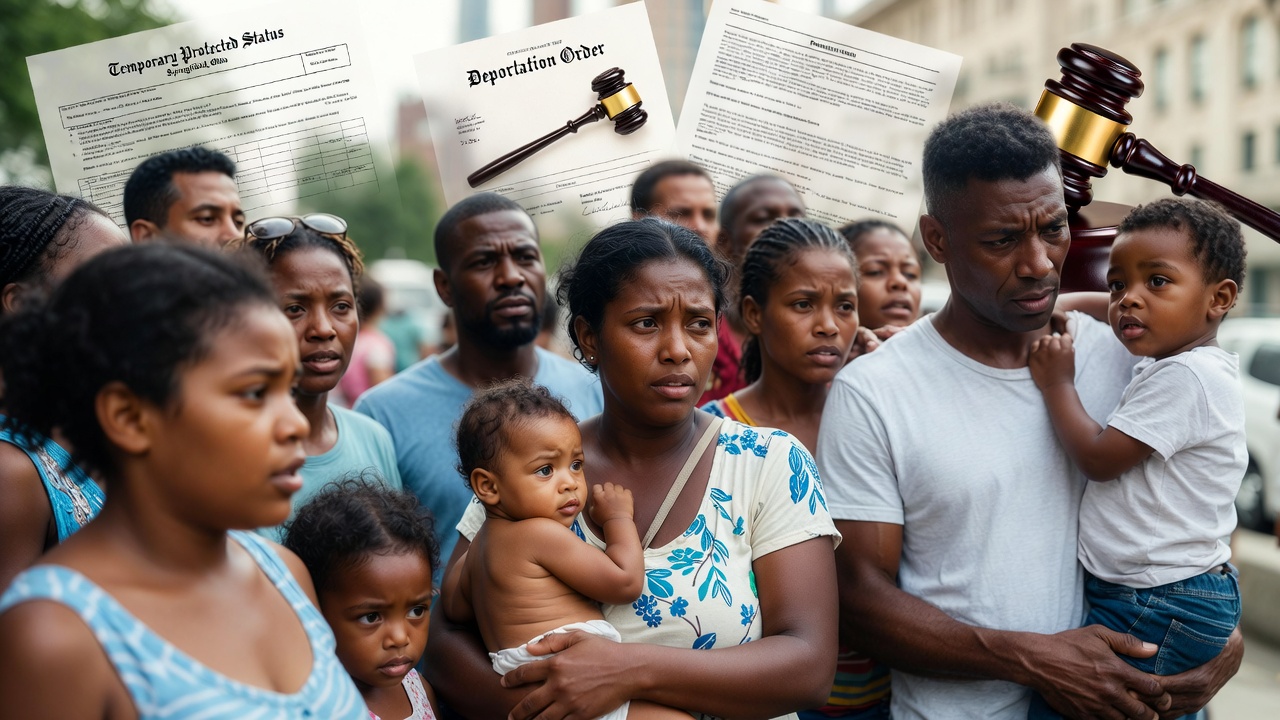
That’s the reality right now for roughly 350,000 people, most of them from Haiti, who have been living here legally under Temporary Protected Status (TPS).
They’re not “illegal immigrants.” They didn’t sneak across the border. They were invited to stay because their home country was too dangerous to return to — first after Haiti’s catastrophic 2010 earthquake, and then again and again because the situation never really got better.
They followed the rules. They paid taxes. They worked in hospitals, restaurants, factories, construction sites, nursing homes. Many have American-born children who only know the United States as home. And now, in 2026, the Trump administration is trying to take that legal protection away.
What TPS Actually Means to Real People
TPS isn’t a green card. It’s not citizenship. But it is a work permit. It’s a driver’s license. It’s the ability to rent an apartment without being afraid the landlord will call ICE. It’s being able to pick up your kids from school without worrying that today might be the day someone takes you away.
hen people say “they could lose everything,” they’re not exaggerating.
- A single mom in Florida who’s been a certified nursing assistant for 12 years
- A dad in Ohio who works at a meat-packing plant and coaches his son’s soccer team
- A college student in Massachusetts whose parents brought her here as a toddler after the earthquake
- A grandmother in New York who sends money back to relatives still trapped in Port-au-Prince
All of them could go from “legal resident with TPS” to “deportable overnight” if the policy goes through.
Why Haiti Still Isn’t Safe
The official government line is that conditions in Haiti have “improved enough” to send people back.But ask anyone who follows Haiti closely — gang violence has taken over huge parts of the capital. Kidnappings are routine. Police are overwhelmed or complicit. Hospitals barely function. After recent hurricanes and political collapse, many experts say returning right now is a death sentence for many.Senator Ed Markey called it what a lot of people are feeling: “This isn’t just policy — it’s a potential death sentence for thousands of vulnerable people.”
The Human Face in Springfield, Ohio
Springfield, Ohio has become one of the most visible examples. Around 15,000 Haitians moved there in recent years. They revived neighborhoods, opened businesses, filled jobs local employers desperately needed.Now those same families are scared to go to work, scared to drive, scared to answer the door.Local officials — even some Republicans — have asked the federal government to give people more time and more notice. The governor said ICE promised at least 24 hours before any big enforcement action. But 24 hours isn’t much when you’re trying to figure out who will take care of your kids.
The Court Stepped In — For Now
In late January 2026, a federal judge temporarily blocked the Trump administration from letting TPS for Haitians expire on February 3rd. That bought some breathing room.But breathing room isn’t the same as safety. Everyone knows this fight is far from over. The next court hearing, the next DHS announcement, the next executive order could change everything again.
The Question No One Should Have to Ask
What do you do when you’ve done everything “the right way” for more than a decade… and the country you’ve called home suddenly says you don’t belong anymore?That’s not a hypothetical question for 350,000 people right now. It’s their everyday reality.And whatever side of the immigration debate you’re on, it’s hard to look at a family that’s been here for years — working, paying taxes, raising American kids — and feel good about the idea of ripping their lives apart in one swift policy stroke.For now, the judge’s order is holding. But the fear isn’t going anywhere.And neither are the people who are just trying to live the life they thought they were allowed to have.