





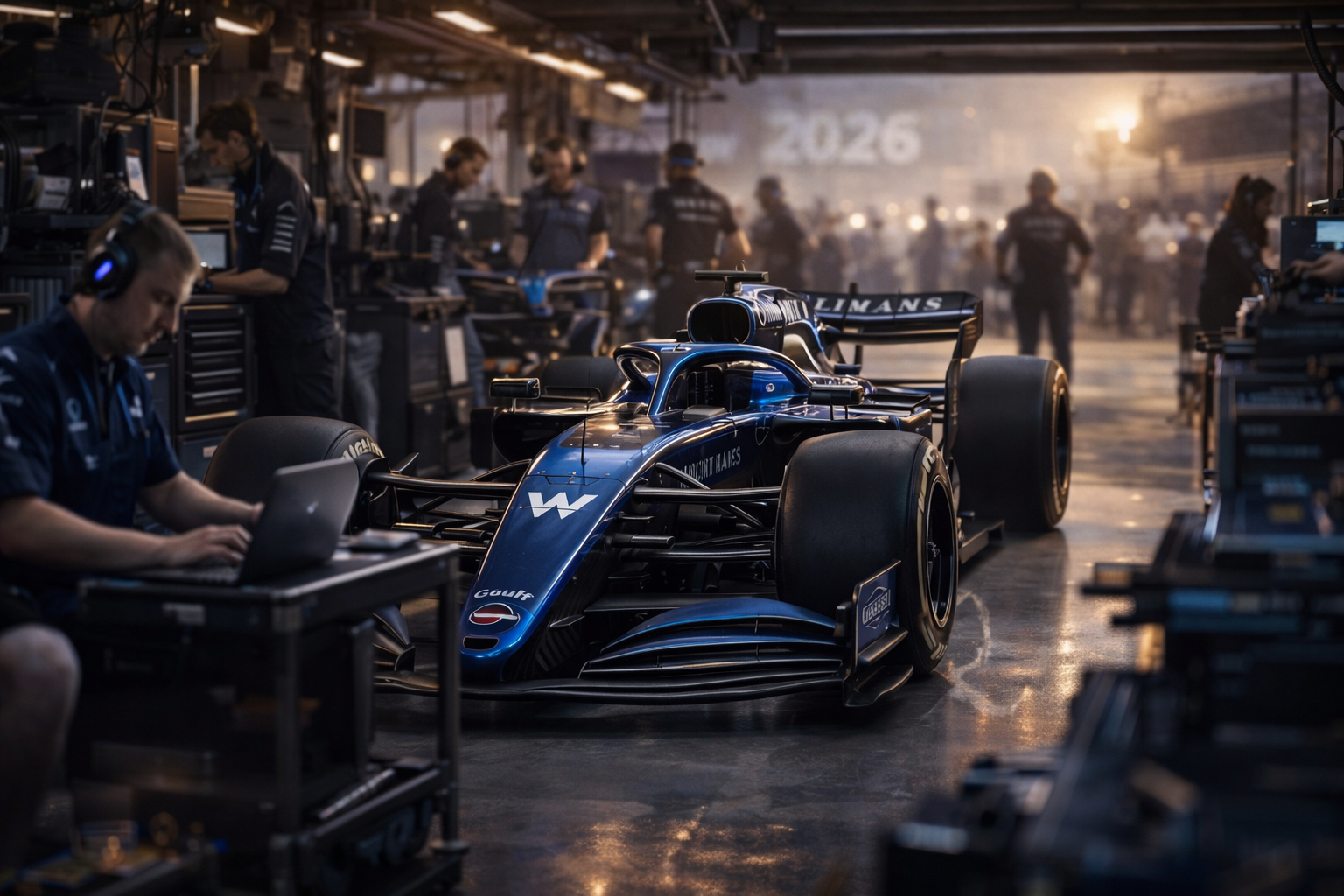
Williams Racing has been refreshingly candid about its Formula 1 plans for the long term: 2025 is a lost year, and everything is being planned around the big regulation shake-up in 2026. On paper, this looks like a very sensible, very ambitious plan for a team that is desperate to get back to winning ways. But despite the clarity of vision, the long-term future of Williams still looks frustratingly cloudy.
Why, then, does a team that has so openly “sacrificed” a year still seem so unsure about its future?
The 2026 Bet Comes With Big Risks
The 2026 regulations offer a blank canvas: new engines, new aero rules, and a new formula for the hybrid engines. For a midfield or backmarker team like Williams, this is a very rare chance to wipe the slate clean.
However, by investing so much in 2026, Williams may find themselves even further behind in the short term, both in terms of technology and budget. In Formula 1, a poor performance impact not only pride but also the budget.
While other teams continue to improve in 2024 and 2025, Williams may enter 2026 with a strong design or realize that they have misunderstood the regulations altogether.
Uncertainty Around Power Units and Integration
Williams’ future is inextricably bound to Mercedes power, but 2026 engines are a mystery. Integration of power units, energy management, and cooling strategies will set the pace.
The top teams can pursue multiple developments simultaneously and make mid-season course corrections. Williams, even with the investment from Dorilton Capital, has to work with more limited budgets. A poor 2026 integration strategy may once again leave them behind, even with new regulations.
Infrastructure Development – But Is It Sufficient?
The team principal, James Vowles, has been candid about the extent of the internal overhaul at Williams. Outdated infrastructure, old manufacturing processes, and inefficient workflows have been systematically replaced.
However, a change in infrastructure does not bring immediate improvements to a car’s performance. Even according to Vowles’ own assessment, Williams is only halfway through this process, and the pertinent question is whether the team will be ready for 2026 or still playing catch-up?
Driver Line-Up and Long-Term Stability
Another loose end is the long-term driver line-up at Williams. While youth and experience have both been factors in recent years, it is important to have a consistent driver line-up in order to build a new-generation car.
Without a driver line-up that is definitely set in stone for 2026 and beyond, the feedback loops in development work could be jeopardized – something that leading teams will not want to happen.
A Familiar Williams Problem
The most worrying issue, however, is one that is familiar. Williams has put its faith in rule changes before, and it has not always ended well. It is not strategy that will win the day, but delivery.
Until then, the impression remains that 2026 is a hope rather than a certainty.