





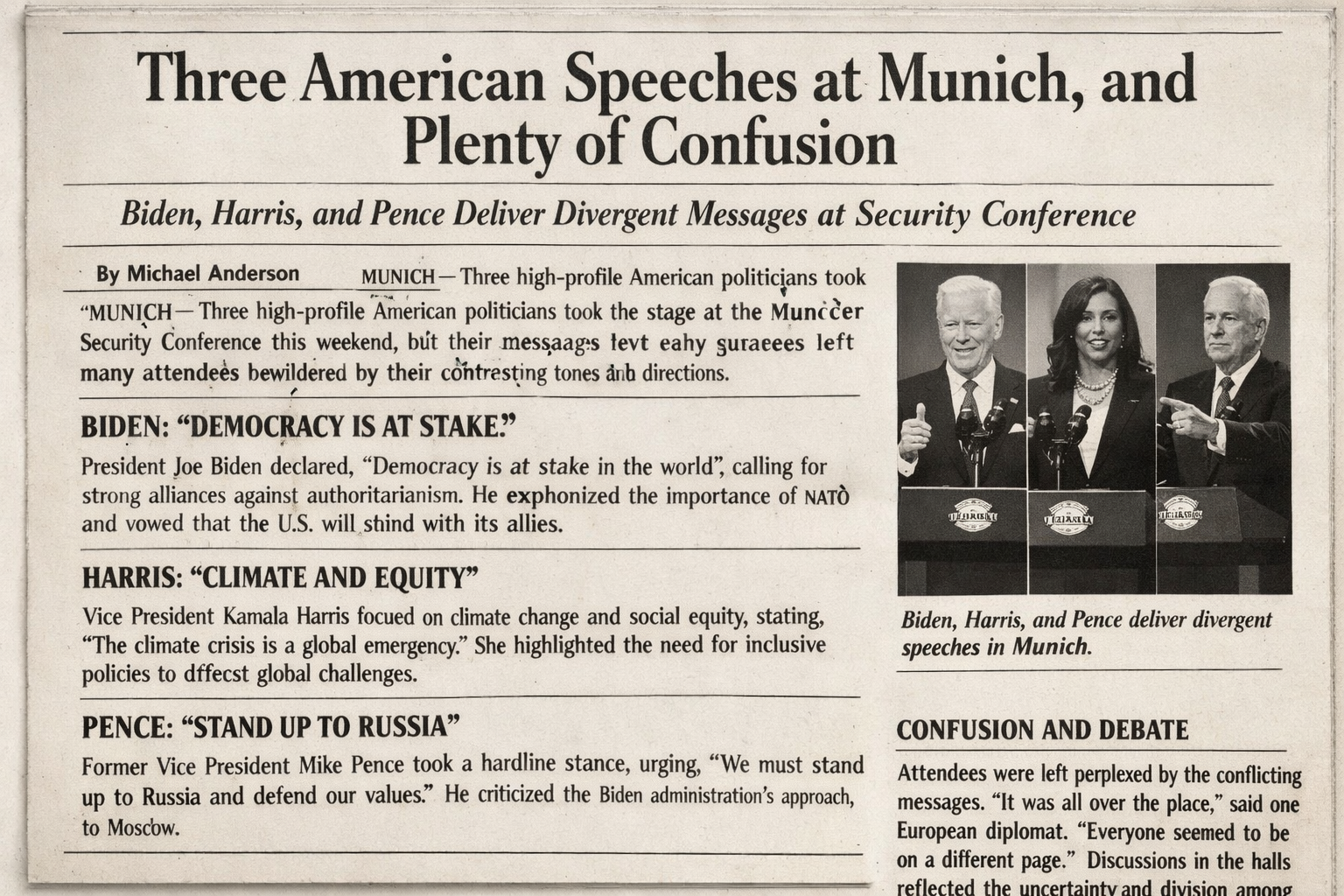
Three American Speeches at Munich, and Plenty of Confusion
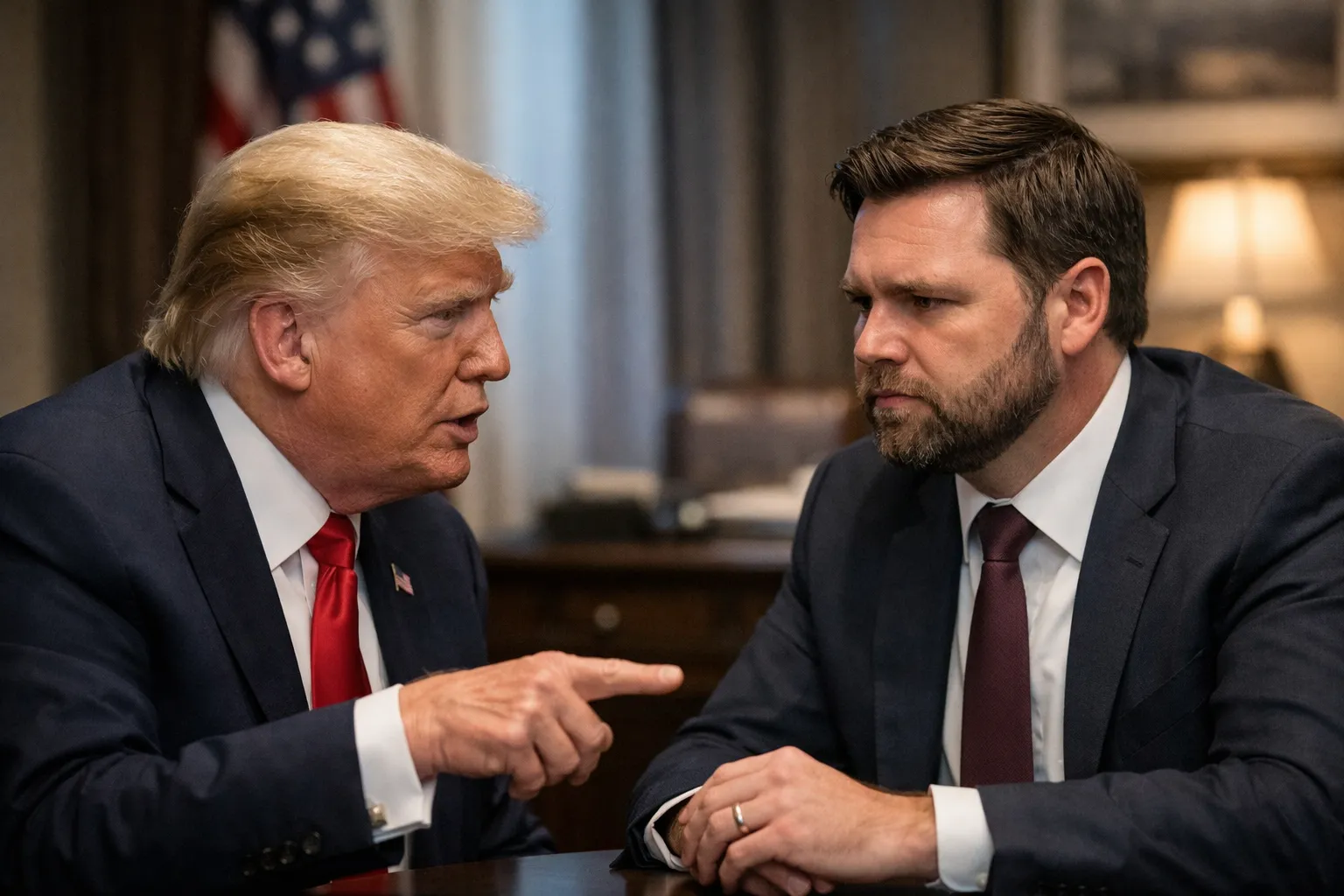
The three American speeches at Munich are one of the most talked-about events at the latest Munich Security Conference, as world leaders struggled to make sense of the American position on security, alliances, and leadership in the world. The speeches, given by senior and former American leaders, showed vastly different sets of priorities.
Contrasting Messages from Washington
US President Joe Biden utilized the opportunity to re-emphasize America’s support for democracy and its traditional allies. By highlighting the importance of NATO, Biden portrayed international politics as a struggle between the promotion of democracy and authoritarianism.
On the other hand, Vice President Kamala Harris utilized the opportunity to highlight the importance of climate change, social justice, and economic security. By doing so, Harris portrayed global security as intertwined with environmental and social issues, focusing on the risks of climate change as a threat to national security, rather than the conventional threat of military attack.
Former Vice President Mike Pence, however, took a much harder tone. By advocating a tougher approach against rival nations, Pence criticized what he called a lack of commitment and encouraged Western countries to take a more aggressive stance, especially regarding Eastern European security.
Allies Left Searching for Clarity
What mattered for many delegates was not the message of the speeches but the lack of consistency between them. European officials have admitted in private that they were not sure which message was the best reflection of the future direction of US foreign policy. Biden spoke as an incumbent president, Harris focused on long-term structural issues, and Pence represented an alternative political route in Washington.
The inconsistency of the messages has sparked concerns about policy continuity, particularly at a point when Europe is so dependent on US leadership on security coordination, defense planning, and diplomatic strategy.
Why the Munich Moment Matters
The Munich conference has long been a platform for strategic signaling. When there are conflicting signals, allies are compelled to hedge, reassess their commitments, and be ready for sudden shifts in policies. The three American speeches highlighted the significance of the fact that domestic political divisions in the US are increasingly spilling over into the international arena.
With tensions remaining high in the international system, it is imperative for Washington to provide clarity and consistency in its policies to avoid strategic miscalculations.
Disclaimer
This article is based on information sourced from publicly available reports and coverage of the Munich Security Conference. Interpretations are for informational purposes only.